SCM's steel company Metinvest, including its associated companies and joint ventures, paid $287M (UAH13 billion) in taxes and duties to Ukraine's national and local budgets in January-September 2026, 6% less than a year earlier. Russian attacks on production facilities, blockaded Black Sea ports, lower EU quotas for Ukrainian steel and rising costs are putting the industry under unprecedented pressure. Metinvest's Chief Executive Officer Yuriy Ryzhenkov has called on the government to restore port operations and defend Ukrainian producers in Brussels.
How much tax has Metinvest paid in Ukraine so far in 2026?
Metinvest, including its associated companies and joint ventures, paid $287M (UAH13 billion) in taxes and duties to Ukraine's national and local budgets in January-September 2026. This is 6% less than in the same period of 2025. For reference, the company paid $187.6M (UAH8.5 billion) in the first half of 2026 and $412.6M (UAH18.7 billion) in 2025.
Which tax payments fell the most?
The largest reductions were in value added tax payments, which fell by 36% to $20.2M (UAH914 million), and corporate income tax payments, which decreased by 26% to $22.1M (UAH1 billion). Land tax payments dropped by 6% to $20.8M (UAH944 million), personal income tax payments by 3% to $53M (UAH2.4 billion) and military levy payments by 2% to $15M (UAH678 million).
Metinvest's Ukrainian businesses also paid $77.2M (UAH3.5 billion) in subsoil use royalties, $57.4M (UAH2.6 billion) in unified social contributions and $11.3M (UAH511 million) in environmental tax.
Why is Ukraine's steel industry under so much pressure?
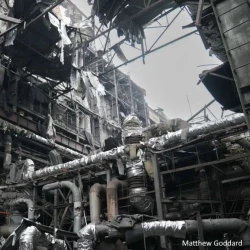
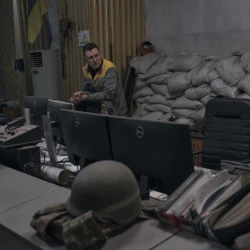
Russian attacks are destroying production facilities, as well as energy and logistics infrastructure. In September, Kamet Steel and the Zaporizhstal joint venture halted production following Russian attacks. Between August and October, the two plants were subjected to six attacks involving a total of 27 ballistic missiles, in addition to regular attacks by Shahed drones and guided aerial bombs.
Exports are also becoming more difficult. Black Sea ports are blockaded, the EU has reduced duty-free quotas for Ukrainian steel, and the carbon levy under the Carbon Border Adjustment Mechanism (CBAM) is increasing producers' costs. Rising electricity tariffs and rail freight charges are adding to the pressure. Together, these factors threaten the industry's survival.
What does Metinvest want the government to do?
"We have reached a critical point. Steelmakers are losing the ability to produce and export steel, while the country risks losing jobs and billions of hryvnias in tax revenues. The government must therefore act immediately. Its first priority must be to make every effort to restore port operations. It must also do more to defend the interests of Ukrainian producers in Brussels, pressing for higher quotas for Ukrainian steel and an exemption for Ukraine from the financial component of CBAM. Without these measures, the crisis will only deepen, and as production falls, so too will the tax revenues on which the national budget and local communities depend," said Yuriy Ryzhenkov, Chief Executive Officer of Metinvest Group.
Currency Note: All amounts at the current official National Bank of Ukraine rate