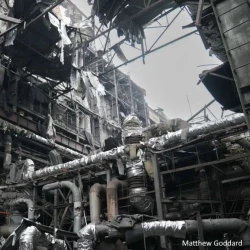
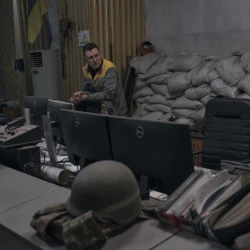
Maxim Timchenko, CEO of SCM's energy company DTEK, has spoken to students at the University of Oxford and Yale University about what Ukraine's energy sector has learnt since Russia's full-scale invasion. At Oxford, he set out three pillars of energy resilience: protection, recovery and people. At Yale, he explained how DTEK engineers have to restart power stations and grid systems almost every week. His message to both audiences was that Ukraine's experience is now important for the energy security of its Western allies.
What did Maxim Timchenko tell students at Oxford?
Mr Timchenko told students at the University of Oxford that the energy security of Western allies now depends on other countries learning from Ukraine's experience. He shared practical insights on what countries such as Britain should begin to adopt, based on three pillars.
The first is protection: preventing damage before it occurs, from physical defences around infrastructure to active air defence. The second is recovery: stabilising damaged sites quickly, with a logistics network that can repair several sites at the same time. The third is people: well-trained, motivated teams with strong management and communications, which reduce restoration times from weeks to days and from months to weeks.
What wider lessons does Ukraine offer Europe?
Mr Timchenko said Ukraine's experience shows that energy systems are now the backbone of national security. He added that centralised energy systems must be replaced by distributed alternatives, and that Europe can only respond to the rising threat of hybrid warfare by Russia if countries cooperate more closely than ever before. He was invited to speak by Dr Tina Fawcett of the Oxford Energy Network, Jan Rosenow of the Environmental Change Institute and Paul Shearing of the ZERO Institute, all at the University of Oxford.
What is a black start, and why does it matter in Ukraine?
A black start is the process of restarting a power station or grid system after a shutdown. At Yale University, a Ukrainian student asked the DTEK CEO how operators balance a grid when a single missile strike can cause a system crisis in seconds. He explained that in the US and Europe, operators only simulate black starts. In Ukraine, DTEK's engineers and dispatchers have to perform them almost every week, without a manual but with hard-won experience. He told the student that an engineering degree gives a strong foundation, but some lessons can only be learnt by doing.
How is Ukraine's energy system changing during the war?
Ukraine is building a new, more distributed energy system while the war continues. Mr Timchenko pointed to wind farms built during wartime, over 1,000 MW of solar installed on home rooftops and a battery in almost every Kyiv apartment as examples of what the new system looks like.
What was his message to future energy leaders?
Mr Timchenko invited students to see Ukraine as a place of opportunity. "Ukraine is where you can see the future of energy, today. Come and build it with us and understand that Ukraine today is no longer a burden, but an asset," he said. He thanked the Ukraine Hub at Yale, Sevgil Musaieva and Michael Mehling for inviting him to join the discussion.