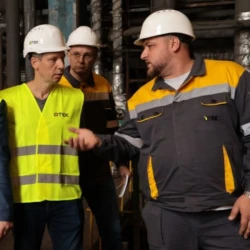


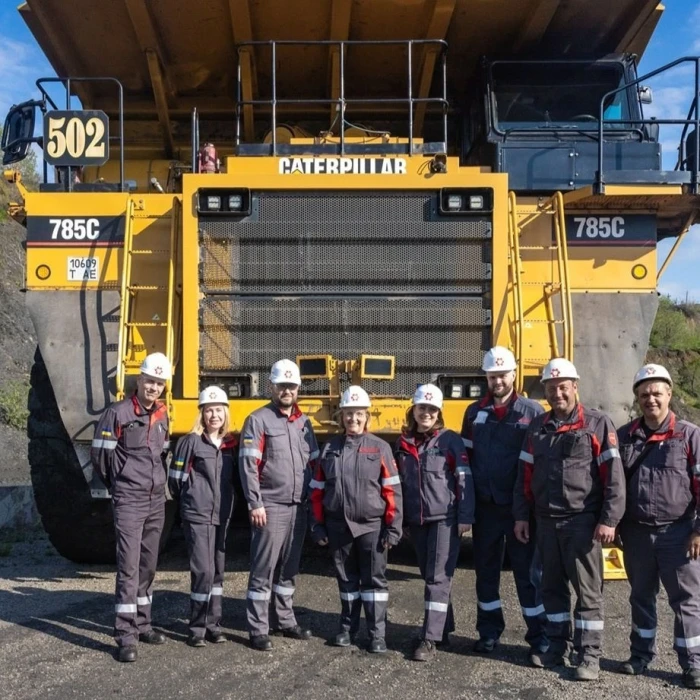
Karin Karlsbro, Deputy Chair of the Committee on International Trade of the European Parliament, recently visited the Northern Mining and Processing Plant and the Kametstal metallurgical plant, which are operated by our metals company Metinvest. The visit to these facilities, located in the Dnipropetrovsk Oblast near the military front line, provided an opportunity to discuss the future of trade between Ukraine and the European Union, the implementation of the Carbon Border Adjustment Mechanism (CBAM), and the ongoing integration of Ukrainian metallurgy into the broader European market.
At the Northern plant, the European Parliament delegation met with leadership to address the operational challenges caused by the war initiated by russia. Topics included employee safety, export conditions for Ukrainian steel and iron ore, and the readiness of the industrial sector for European integration. The delegation toured the construction site of the new tailings thickening complex, a project representing an investment of UAH 7.5 billion ($170 million). This facility implements modern ecological and hydraulic engineering technologies. Plans were also presented for a new flotation complex designed to produce high-quality pellets for green steel manufacturing.
Discussions at Kametstal focused on energy security, the modernisation of infrastructure, and the adoption of European environmental standards. A central theme of the meetings was the impact of CBAM on Ukrainian producers. The current wartime conditions create severe financial and logistical obstacles. Consequently, European consumers are increasingly seeking alternative suppliers, reducing the export of Ukrainian pig iron, billets, and rolled products.
To address these challenges, SCM proposes temporarily exempting imported goods from Ukraine from the financial component of CBAM for the duration of martial law, while continuing to fulfil all reporting requirements. Following the war, a revised mechanism could be established where CBAM payments applied to Ukrainian products are redirected to finance decarbonisation efforts. This would specifically support the purchase of European equipment for green energy and steel production. Such a strategy will maintain the long-term competitiveness of the industry, gather necessary funds for environmental modernisation, and generate demand for advanced European technologies.
During her visit, Karin Karlsbro emphasised the necessity of understanding the real conditions on the ground. She noted that shaping the political agenda in the European Parliament requires recognising Ukraine as a European state facing extraordinary difficulties. Karlsbro acknowledged the strategic importance of the metallurgical sector to the economy and expressed appreciation for the ongoing operations despite the obstacles faced by SCM companies and their employees. The visit highlighted the vital role that protecting Ukrainian industry plays in the broader context of European security and economic stability.