

SITUATION
Ukrtelecom is Ukraine's national fixed-line telecommunications operator. Part of SCM since 2013, the company operates the country's largest internet network and most extensive fibre-optic infrastructure, now stretching nearly 93,000 kilometres — enough to wrap around the globe more than twice.
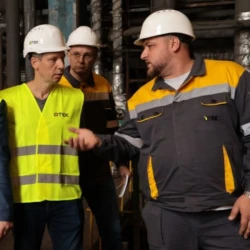
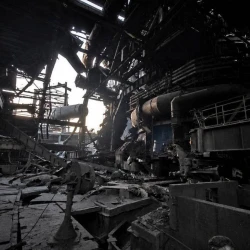
Telecommunications is among the most directly targeted sectors in russia's war against Ukraine. Since the full-scale invasion began, Ukrtelecom has faced a combination of threats with few parallels in the modern telecoms industry: targeted missile strikes on infrastructure, sophisticated and sustained cyberattacks, prolonged power outages caused by attacks on the energy grid, and the temporary occupation of territory in which it operated. In a digitalised society, every one of these attacks has consequences that extend far beyond the company itself — severing connectivity risks cutting off access to emergency services, banking, education, and the coordination of military operations.
RESILIENCE TODAY
Rather than falling into a strategy of conservation, Ukrtelecom has continued to build. Since the start of the full-scale war, the company has invested approximately UAH 2 billion ($54 million) in network development and cyber resilience, constructing 21,500 kilometres of new optical lines during the conflict. Today, internet services are available in 90% of the settlements where the network operated before the invasion, covering 3.4 million households along with 1,388 medical and 1,926 educational institutions.
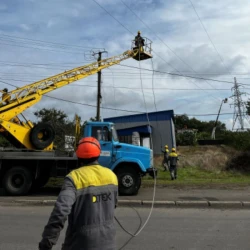
Keeping infrastructure powered during prolonged blackouts has required a parallel investment in energy independence. Since 2022, Ukrtelecom has consumed over 1.3 million litres of diesel fuel to power network elements during outages, while simultaneously reducing external electricity consumption by 20% through network optimisation — ensuring that connectivity remains stable even when the broader energy grid is under attack.
Cybersecurity has become central to the company's operations. Operating a national network during an active war makes Ukrtelecom a persistent target for russian cyberattacks. The company has developed protocols for rapid restoration of services after both physical and digital disruption, building a body of practical expertise in cyber defence under conditions that no European operator has previously encountered.
Ukrtelecom is also contributing to national resilience beyond its core business. The company is an active participant in the Critical Infrastructure initiative, a project supporting independent regional newsrooms operating in areas most severely affected by the war, from Sumy and Kharkiv to Kherson and Mykolaiv. Additionally, Ukrtelecom has entered a strategic partnership with Kyiv Polytechnic Institute to launch a dual education programme developing the next generation of IT and telecommunications specialists, investing in the human capital that Ukraine will need for its recovery.
The company is the largest taxpayer among fixed-line communication providers in Ukraine, contributing nearly UAH 1.6 billion ($36.5 million) in taxes and duties in 2025 alone.
RESILIENCE TOMORROW
The war has reshaped Ukrtelecom's strategic direction, accelerating both its technological modernisation and its integration into the European telecommunications sector.
On 1 January 2026, Ukrtelecom established 1 Gigabit per second as the standard speed for all households connected to its GPON fibre-optic network — an automatic upgrade applied nationwide without additional fees. This aligns Ukraine's digital infrastructure with the European Union's "Path to the Digital Decade" programme, which targets universal Gigabit connectivity across all member states by 2030. Unlike many local providers, Ukrtelecom applies uniform construction standards, meaning a subscriber in a small village receives the same specification of service as one in a major city.
Ukrtelecom has also become the first Ukrainian company to join Connect Europe and has been accepted as a member of ETIS, the European community of telecommunications professionals. These memberships provide a permanent platform for dialogue with major European operators through working groups, benchmarking initiatives, and industry-wide events.
The company's integration into European structures is not merely institutional — it is practical. CEO Yuriy Kurmaz addressed a European Parliament meeting in a discussion on network resilience and EU defence policy, while Ukrtelecom representatives have conducted detailed knowledge-sharing sessions with Finnish telecoms companies. European partners increasingly recognise Ukraine as offering hard-won, operational lessons in network resilience that no simulation or contingency plan can replicate.