

The ongoing war in Ukraine has forced domestic industries to adapt rapidly to unprecedented challenges, particularly in the realm of civil defence. A recent report by Politico underlines how this hard-won experience is now being sought by European neighbours. Baltic states, facing increased airspace incursions by drones, are actively engaging with Ukrainian defence manufacturers and civil protection experts to enhance their national security infrastructure.
According to the article, Baltic companies and governments have initiated discussions to procure bomb shelters and learn from Ukraine's practical experience. The geographical realities of the Baltic nations mean that early preparation is essential to protect civilian populations in the event of any escalation by russia.
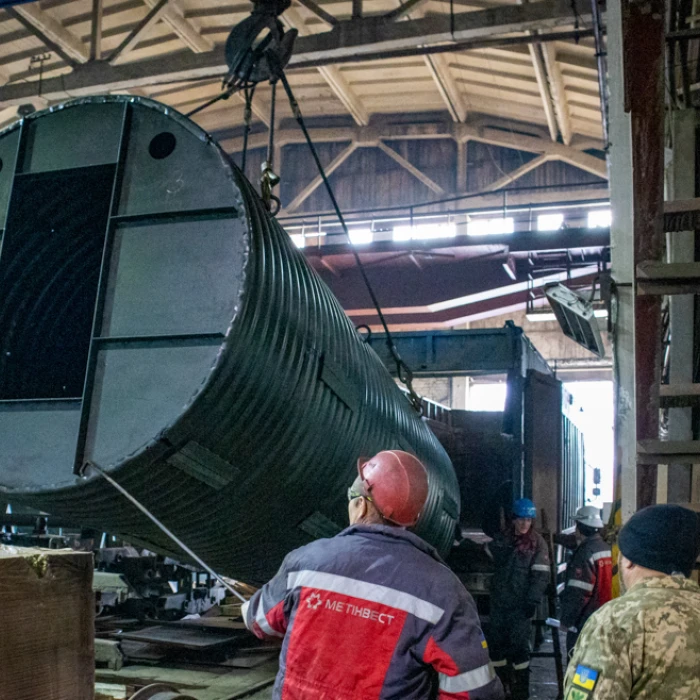
Our steel company Metinvest has been at the forefront of this industrial adaptation. Following the full-scale invasion by russia in February 2022, the company swiftly diversified its operations to include the construction of robust shelters. Initially focusing on protecting civilians, the manufacturing scope quickly broadened. Today, the company produces both above-ground and below-ground shelters designed specifically to shield individuals from sophisticated missile and drone attacks.
The Politico piece highlights that Baltic governments have held early-stage talks with the company. Metinvest CEO Yuriy Ryzhenkov emphasised that the true value lies beyond the physical structures themselves. He stated that while many can construct a basic shelter, the tactical know-how acquired during active war is the most critical asset that Ukraine can offer.
For SCM and our shareholder Rinat Akhmetov, the commitment to safeguarding lives remains absolute. The technical capabilities developed by companies that are part of SCM demonstrate how industrial resources can be effectively mobilised for civil protection. The transition from civilian steel production to the manufacturing of advanced protective infrastructure reflects a necessary and highly effective response to the realities of war.
Lithuanian and Estonian officials have noted that the experience gained in Ukraine is highly valuable for strengthening their preparedness and resilience systems. By transferring this practical knowledge, Ukrainian enterprises can play a direct role in fortifying the broader European security architecture.
As the geopolitical landscape remains volatile, the collaboration between Ukrainian manufacturers and European governments represents a positive step towards collective security. SCM companies will continue to refine these engineering solutions, ensuring that the expertise developed under the most difficult circumstances can be used to protect lives across the continent.