

Former Google CEO Eric Schmidt’s decision to plow up to $70 million into retail and commercial property in Kyiv has served to focus global investor attention on Ukraine’s long-term potential. Domestic blue-chip firms like System Capital Management and long-time foreign investors like McDonalds are some of the firms forging ahead with major investments despite Russia’s four-year invasion. Experts say those investors willing to partner with Ukraine in its toughest hour stand to benefit the most when the historic reconstruction period – estimated at $600 billion – begins in earnest upon the war’s conclusion.
- SCM has invested more than $4 billion since Russia launched its full-scale invasion of Ukraine in February 2022.
- SCM’s investment accounts for about a third of all private investment during the war, according to a study by NV.
- DTEK, SCM’s energy arm, is investing $1.4 billion to build a wind farm in central Ukraine and an additional $1 billion to develop a gas-fired generation plant with installed capacity of 650 MW.
- Ukraine may need up to $600 billion in investment to rebuild its war-torn economy, according to one estimate.
Former Google CEO Eric Schmidt’s decision to snap up $70 million in Ukrainian retail and commercial property has acted as a high-profile wake-up call for global capital.
Coming amid a relentless Russian military campaign that routinely targets civilian infrastructure, Schmidt’s large-scale bet sends a profound message: for investors willing to look past immediate conflict, supporting Ukraine’s economy offers massive long-term upside.
Global brands present in Ukraine share this conviction.
McDonald’s has plowed more than $120 million into the country since Russia’s full-scale invasion in February 2022, significantly expanding its network to nearly 140 restaurants while upgrading existing facilities. Meanwhile, Swiss giant Nestlé deployed $50 million over the same period to open a new pasta production facility, marking its fourth plant in the country.
Yet, the most critical investment signals come from domestic blue-chip firms.
System Capital Management (SCM), Ukraine’s largest private employer, has been the primary engine driving the nation's wartime economic resilience. Under sole owner Rinat Akhmetov, SCM has pumped more than $4 billion into the economy since the invasion began, modernizing power grids and building renewables despite losing some of its largest industrial assets to the fighting. By one estimate, SCM has accounted for about a third of all private investment since the full-scale invasion began.
Kyivstar, the country’s largest telecommunications provider, has invested more than $1.3 billion over the same period to upgrade vital digital networks and develop energy backups to ensure citizens stay connected.
Few outside observers today doubt Ukraine’s long-term potential.
It remains the largest country entirely within Europe by landmass, possesses vast natural resources – including natural gas, coal, iron ore, lithium, and titanium – and boasts some of the world’s most fertile agricultural soil, long earning it the title "Breadbasket of Europe."
Ukraine is also home to a highly educated population recognized for innovation; today, that ingenuity is on full display as locally grown defense technology rewrites the rules of modern warfare. Furthermore, despite a large wartime exodus of citizens, Ukraine remains an attractive consumer market with a population larger than 22 of the 27 EU nations.
Membership in the European Union – now a realistic possibility within a decade – would fundamentally augment these intrinsic strengths, bolstering the investment case for Ukraine.
Navigating The Wartime Dilemma
But the stark reality of modern warfare creates a profound dilemma for potential partners.
A conflict defined by precision missile strikes and AI-powered drones means any investment in traditional brick-and-mortar assets is inherently vulnerable.
Russia has routinely targeted civilian and commercial infrastructure, including facilities owned by foreign firms. In January, a Russian drone damaged a sunflower oil processing facility owned by U.S. agribusiness firm Bunge, an attack Kyiv called deliberate. In August 2025, a Russian missile struck a manufacturing plant belonging to U.S.-based Flex.
Experts note this looming threat keeps many global companies sitting on the fence, waiting for a definitive sign that the war is drawing to a close before committing capital.
To counter this hesitation and bolster its embattled economy today, Ukraine is aggressively offering incentives to attract foreign capital, including tax breaks and accelerated approvals in crucial sectors like energy, agriculture, and manufacturing.
International powerhouses are starting to take notice. Last year, South Korean tech giants – including Samsung, LG, and Hyundai – reportedly began exploring potential partnerships in Ukrainian infrastructure, energy, and shipbuilding.
While some foreign firms study the landscape, domestic leaders like SCM and Kyivstar, alongside long-time international investors like McDonald’s and Nestlé, are forging ahead. They are adapting in real-time, building structural resilience based on harsh wartime lessons.
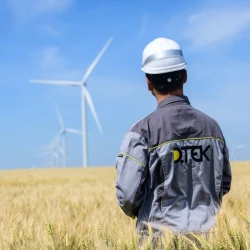
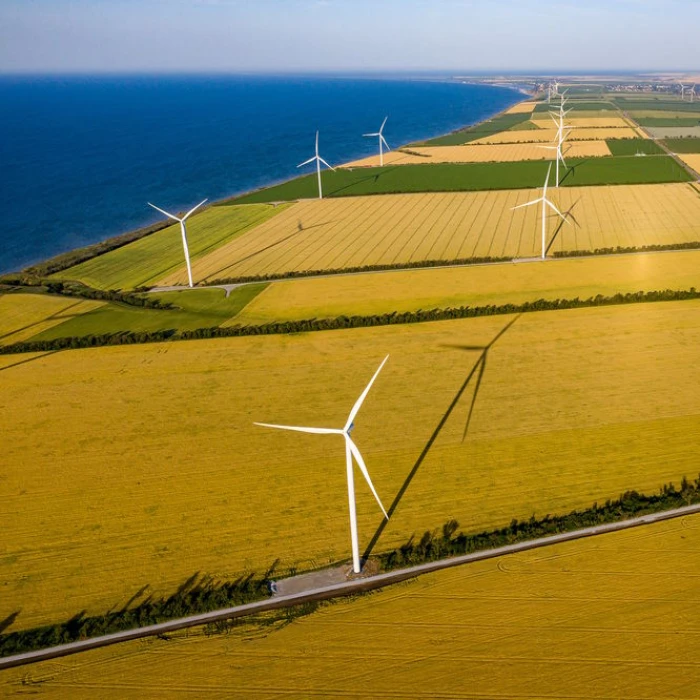
For example, Ukraine’s massive, Soviet-era fossil-fuel power plants have proven vulnerable to targeted strikes, leading to severe power and heating cuts. To adapt, SCM’s energy business, DTEK, is developing a $1.4 billion, 650-MW wind farm in central Ukraine, its latest war-time project. The wind farm will provide a decentralized source of electricity for up to 1 million homes. Construction is scheduled to start in early 2027. By scattering up to 100 individual turbines across a wide area and investing heavily in battery storage, DTEK is creating a decentralized energy network that is far harder to disrupt.
DTEK, Ukraine’s largest private energy company, and GE Vernova, a global leader in energy technology, signed a memorandum of understanding (MoU) to advance the development of a new gas-fired power plant in western Ukraine. The agreement, announced during the Ukraine Recovery Conference in Gdansk in June, establishes a framework for cooperation on a new 650-MW combined-cycle gas turbine (CCGT) project at a DTEK power plant site in Western Ukraine. The total investment size is $1 billion.
Simultaneously, Metinvest, SCM’s steel and mining business, is investing heavily in localized solar generation to guarantee uninterrupted power to its plants.
A Shared Reconstruction Horizon
By sustaining operations through the darkest days of the war, these firms are preserving the economic foundations of what will undoubtedly be a historic post-war reconstruction effort. Experts estimate that Ukraine will require as much as $600 billion in investment over the next decade to rebuild its economy, a sum roughly three times the size of its current GDP.
For forward-looking companies in construction, infrastructure, energy, and banking, this reconstruction represents an unprecedented opportunity to help rebuild a nation from the ground up. In this environment, a wartime presence is not just a commercial advantage; it is a demonstration of alignment and trust.
"When this war is over, the dust settles, and Ukraine looks around, the definitive question will be: 'Who stood with us when things were at their toughest?'" said Nick Piazza, an American investment banker who has worked in Ukraine for nearly three decades. "The people and companies making a point of showing up right now, saying 'we are here,' are the ones who will earn the trust required to lead Ukraine's future reconstruction."
Reconstruction, however, is only one part of Ukraine’s bright horizon. European Union integration – a long-held national aspiration – is finally within reach. The EU officially launched substantive accession talks with Ukraine earlier this month, the first crucial milestone in a grueling process that experts say will take at least a decade to complete.
Nonetheless, the very path toward integration will spark sweeping legal reforms and regulatory alignment, while unlocking massive institutional funding. This timing is highly propitious considering Ukraine’s broader financing needs.
As strategic and institutional capital flows in, it will steadily improve Ukraine’s risk profile, lower borrowing costs, strengthen the national currency, and lift property values.
Ultimately, this economic evolution will reward those who chose to invest in Ukraine when it mattered most: visionaries like Schmidt, dedicated brands like McDonald’s and Nestlé, and above all, the domestic engines of resilience like Kyivstar and SCM.