

When Ukraine voted for independence 35 years ago, its Soviet planned economy rested almost entirely on heavy industry and agriculture, which accounted for roughly 70 percent of output.
Technologically, the new nation was stranded in an analog past: about six to seven million residential telephone lines served a population exceeding 50 million, while personal computers were virtually nonexistent outside specialized state laboratories. Communication was treated as a scarce, rationed state utility rather than an engine of economic growth.
It was a steep uphill climb for the newly independent nation, compounded by decades of Russian interference that ultimately culminated in all-out war. Yet against these formidable odds, Ukraine has achieved remarkable economic progress – nowhere more visibly than in its booming information technology (IT) sector.
Today, Ukraine is rightly described as a digital-first economy. It counts more than 300,000 IT professionals, exports over $7 billion in tech services annually, and runs a world-class e-governance super-app in Diia. Ukrainian software developers and startups routinely capture the attention and capital of Silicon Valley investors, demonstrating their global competitiveness.
Yet Ukraine’s inspiring digital transformation rests in large part on the physical infrastructure buried beneath the pavement. Ukrtelecom, once the poster child of Ukraine’s sluggish Soviet-era utility sector, has quietly transformed into the indispensable backbone of the country’s digital revolution.
Under the ownership of Rinat Akhmetov’s Systems Capital Management (SCM), Ukraine’s largest business group by revenue and employees, Ukrtelecom has invested more than one hundred million dollars over the past decade just to replace obsolete copper lines with high-capacity fiber. That capital campaign has brought more resilient broadband with gigabyte speed to millions of citizens, thousands of businesses, and numerous critical state institutions – strengthening national security in the process.
Russia’s full-scale invasion in February 2022 validated that investment foresight, elevating network modernization from an economic upgrade to an urgent matter of national defense.
GPON Investment = National Security
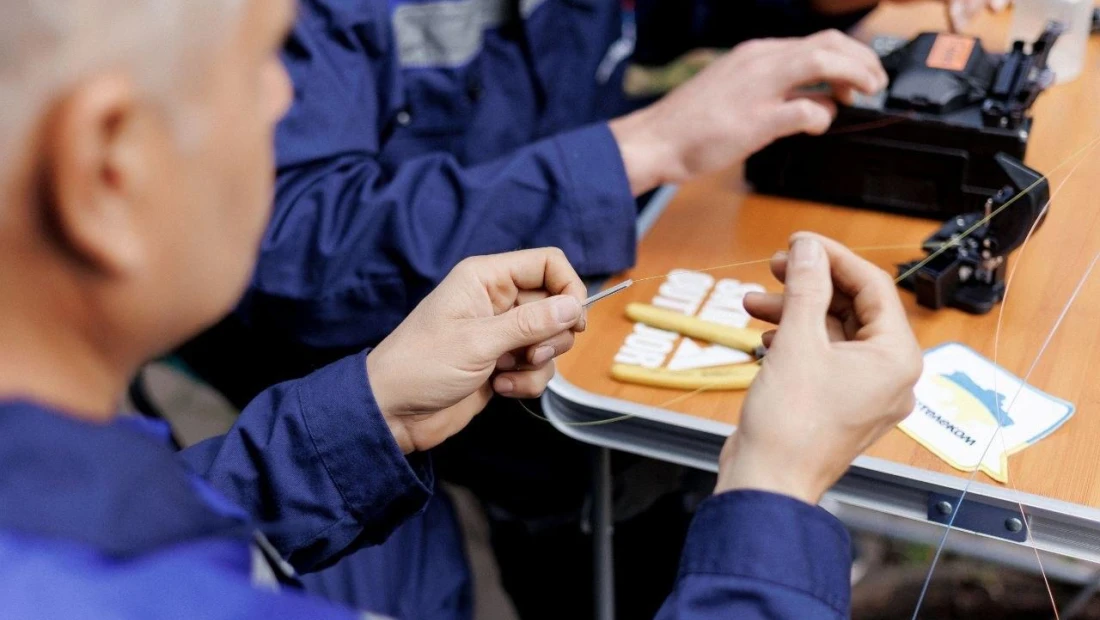
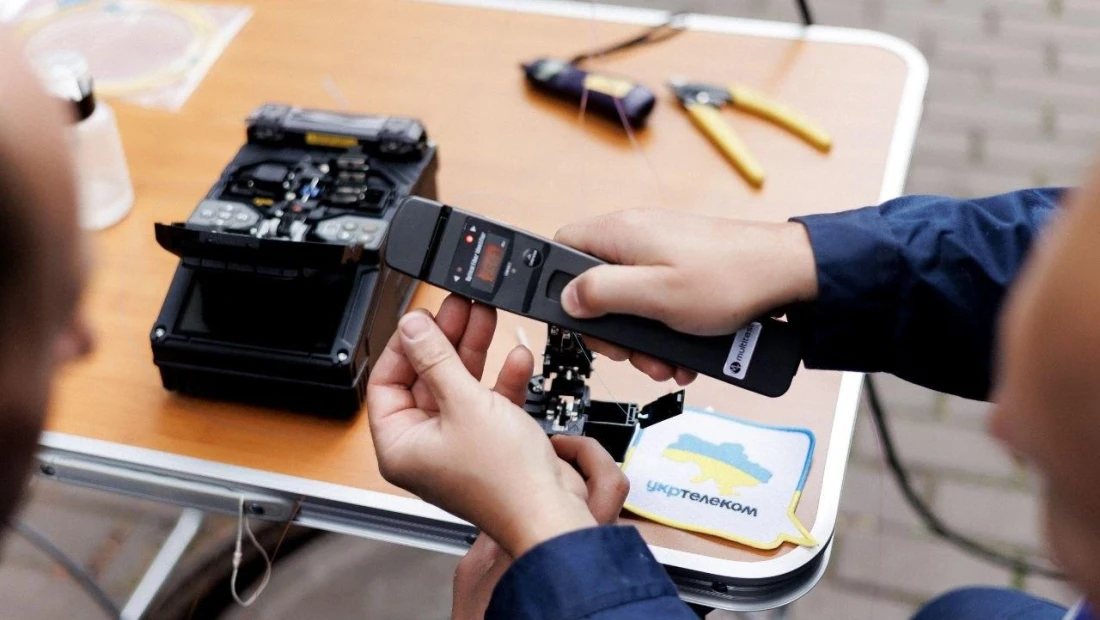
Under the guidance of its new owner, SCM, Ukrtelecom launched a modernization program in 2015 to replace the company’s outdated copper infrastructure with a faster, fiber-optic network, including to underserved rural regions.
In 2021 alone, while adhering to strict Covid-19 quarantine measures, Ukrtelecom, together with its European partners, built a record 14,000 kilometers of fiber-optic communication lines. The feat demonstrated the company could work under extreme conditions, experience that would prove crucial two years later when Russia launched its full-scale invasion.
In modernizing its network, Ukrtelecom deployed a passive fiber-optic architecture known as GPON, which is less susceptible to prolonged blackouts compared to Fiber to the Building (FTTB), which had for years dominated the network architecture in large cities.
Russia’s bid to end Ukraine’s short history of independence with a full-scale invasion turned the country’s communications infrastructure into a primary battle ground. Russian forces systematically took over cellular towers, cut fiber optic links, and rerouted local internet traffic through Russian state-controlled networks.
When Ukraine’s armed forces heroically beat back the Russian invaders, turning the tide of the war, Moscow began targeting Ukrainian energy infrastructure in large cities to inflict maximum human suffering and economic instability.
The resulting long blackouts cut Internet connections delivered by FTTB networks, disrupting households, businesses, schools, hospitals, and defense firms. Overnight, GPON’s more resilient technology became a national security imperative.
Ukrtelecom and its Ukrainian competitors immediately rose to the challenge, accelerating GPON deployment throughout the country, including in frontline towns. With Russia intensifying its attacks on the power grid, Ukrtelecom and its chief rival, Kyivstar, have begun sharing parts of their fiber networks — an agreement to cooperate under an Open Access model aimed at guaranteeing continuous, secure internet access and accelerating the expansion of optic broadband services across the country.
Despite constant Russian attacks on cities and villages that severely damage infrastructure, Ukrtelecom’s operations are remarkably stable. The company’s workforce has mastered the ability to repair lines quickly and effectively while under fire. The results speak for themselves: today, 90 percent of the settlements Ukrtelecom served prior to the war still have Internet access.
Ukrtelecom isn’t standing still. It continues to replace the copper segment of its infrastructure, expand its region of coverage, and bring more services to customers, including hospitals and schools. The company now offers a new speed standard of up to 1 gigabyte per second (Gbps) to all subscribers on its GPON network, helping bridge the historic gap between urban and rural Internet service.
Ukrtelecom Today and Tomorrow
Today, Ukrtelecom’s GPON network stretches more than 95,000 kilometers, the most of any Ukrainian telecom, bringing fast, reliable Internet access to 3.4 million households and serving 1,430 medical institutions, 2,016 educational facilities, and numerous defense firms.
Ukrtelecom’s GPON expansion is part of a broader, well-capitalized push by Ukraine’s telecommunications industry to rapidly close the three-decade-old infrastructure gap that once separated the country from European Union members. In 2024, investments in telecommunications and IT services rose by a third, reaching $800 million, according to Ukrainian state data.
As it plows money into modernizing Ukraine’s telecommunications infrastructure, Ukrtelecom is ensuring that it meets EU standards, facilitating the country’s inevitable entry into the bloc. Last year, Ukrtelecom became the first Ukrainian company to join Connect Europe, the continent’s premier telecom association.
Thirty-five years after an investment-starved Ukraine voted for independence, the country has made remarkable strides in closing the technology gap with European neighbors. The deficit copper wiring of a Soviet planned economy at the dawn of independence has given way to an expansive energy-resilient fiber network that powers a modern digital state with state-of-the-art e-governance tools and globally competitive technology firms.
By teaming up with leading international telecommunications hardware companies, we are helping reduce the digital divide between rural areas and urban centers.