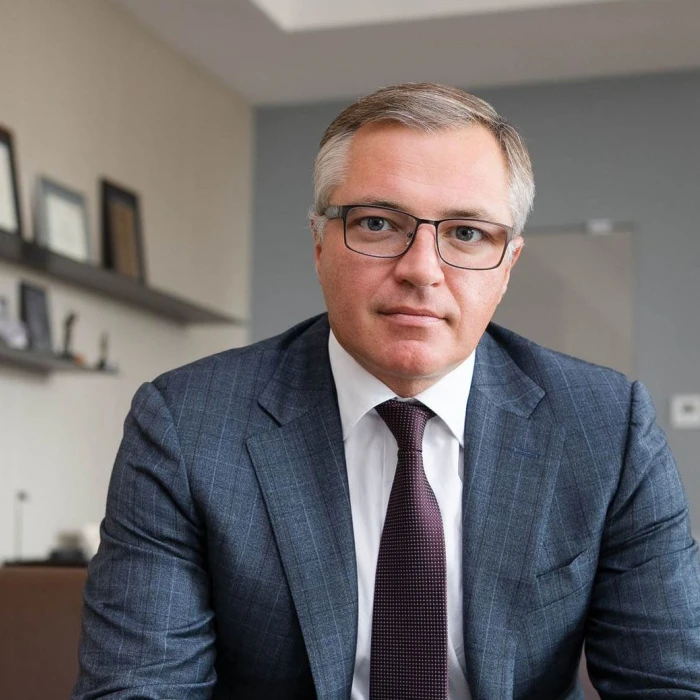
Yuriy Ryzhenkov, CEO of SCM's steel company Metinvest, has given an interview to Fortune about the pressure on Ukrainian metallurgy from russian attacks and EU trade restrictions. He described the current stage of the war as one of the most difficult for Metinvest since the full-scale invasion began. In July 2026, the EU reduced its steel import quota for Ukraine by 60%. Negotiations are ongoing, and Metinvest continues to work for its more than 35,000 employees.
How has the war affected Metinvest's steel plants?
Metinvest's plants are under constant russian attack. Mr Ryzhenkov, who has led Metinvest, the largest steel producer in Ukraine, since 2013, told Fortune's Kamal Ahmed that the current stage of the war is one of the most difficult for the company since the full-scale invasion began more than four years ago.
"The blockade of seaports is now tighter than in 2022," he said. "Our enterprises have been repeatedly hit over the past four and a half years. And although we have restored them after each shelling, the losses are still tangible."
After large-scale russian shelling in August and September 2026, Metinvest had to stop both of its steel plants. The company lost 14 people at its steel plants in these attacks. Hundreds of Metinvest colleagues have died in the war.
What do the new EU steel quotas mean for Ukraine?
The new quotas sharply reduce how much steel Ukraine can sell to the EU. In July 2026, the EU introduced quotas on steel imports to protect European industry from cheaper foreign products, and the quota for Ukraine was reduced by 60%. According to the analytical company GMK Center, this could cut Ukrainian steel exports to the EU by 1.3 million tonnes a year.
"If we compare the quotas allocated to Ukraine this year with last year's supply volumes, the reduction is 60%. And this is in the conditions of blocked ports, when we literally have no alternative left," said Mr Ryzhenkov.
When the full-scale invasion began and Ukraine's ports were blocked, the EU lifted all restrictions on Ukrainian steel, as the European market became the only one available. Mr Ryzhenkov called this the right decision. The new quotas treat Ukraine in the same way as other countries outside the EU. Negotiations are ongoing, and the EU has stated that it understands the exceptional conditions Ukraine faces.
How has Ukrainian steel production changed since 2021?
Between 2021 and 2025, steel production in Ukraine fell from 21 million to 7.4 million tonnes. Exports fell from $22 billion to $6 billion, and tax revenues to the state budget from $3.5 billion to $870 million. Mr Ryzhenkov explained that, even under normal conditions, a steel business usually needs to load at least 90% of its production capacity and have long-term sales markets to be profitable.
What does Ukrainian steel need to keep working?
According to Mr Ryzhenkov, the industry needs full access to the European market and conditions that make significant investment possible. "It is very difficult to hold on if Ukraine is not allowed to fully operate in the European market, and at the same time circumstances make any significant investments impossible," he said.
Metinvest continues to work for its people. Mr Ryzhenkov comes from a family with several generations of links to metallurgy, which gives him the determination to keep going.
"We employ over 35,000 people who have families. Another 8,500 of our employees serve in the Armed Forces of Ukraine and are also counting on us. So why slam the door when we can still try to do something to keep working? I just don't see the point in doing that," he said.