

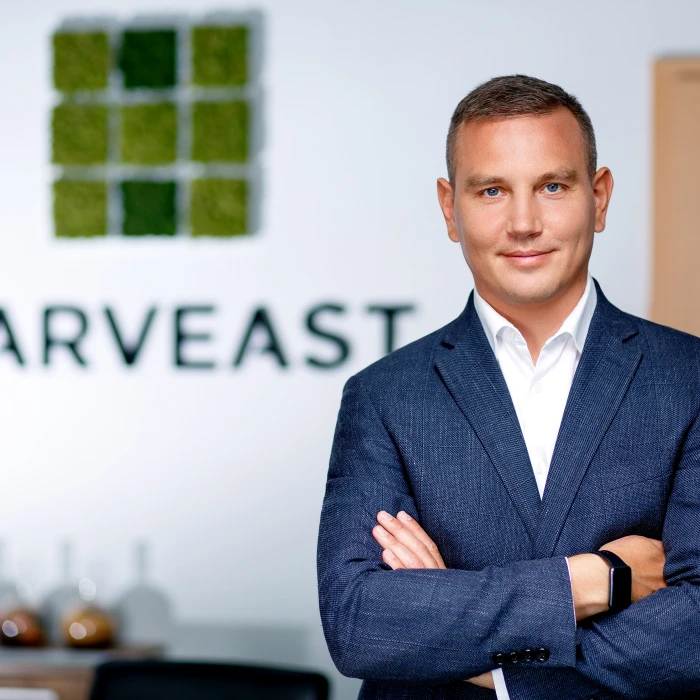
By Dmitry Skornyakov, CEO of HarvEast
Why should Ukraine, with a long Black Sea coastline, have to ask russian permission to use the seaways? Why should Ukraine be told by the aggressor what it can and cannot transport? Instead, we need free shipping. Apart from anything else, it’s what the global food markets urgently need.
I agree with the President of Ukraine: we don’t need any agreements with russia. The Grain Deal was originally concluded between the UN and Turkey. Our task now is to work with Turkey again to ensure we can continue exporting our grain.
It will definitely provide a better return on investment than the Grain Deal ever did. That is because russia was constantly interfering with the Grain Deal, in particular detaining vessels which meant they sat idle.
On top of the tragedy of the war in Ukraine, which is entirely russia’s responsibility, the serious reductions in grain exports from Ukraine is a global tragedy, also of russia’s making.
Before russia’s full-scale invasion of Ukraine in February 2022, Ukraine supplied nearly 15% of the world’s corn exports and over 50% of the world’s sunflower oil, as well as significant amounts of wheat and rapeseed. These are fundamental ingredients in staple diets across the world.
Since the invasion, Ukraine’s agricultural exports have dropped significantly because Russia has blocked the Black Sea ports. Тhe export of products that did not fall under the Grain Deal — metal and chemistry — have fallen even more significantly.
The Grain Deal, brokered by Turkey and the UN, initially ran for 120 days from July 2022. The agreement was that grain, other foodstuffs and fertilizer would have guaranteed safe passage through the Black Sea in specific corridors. However, the russians have continued to cause problems.
There were a number of abuses of the system, particularly very strong allegations that russia used the deal to smuggle munitions and other materiel. And russia has unilaterally stopped co-operation from time to time but the deal has been extended and has largely been in operation for a year. It has not been perfect but it has served a purpose.
However, russians have acted only in their own interests, reneging on agreements and taking the actions that have the widest possible negative outcome for as many people as possible.
In this case, those people are the poorest people in the world. Before February 2022, 40% of the World Food Program’s wheat came from Ukraine. Countries as far apart as Egypt and Bangladesh imported around 25% of their grain from Ukraine. And last year, the African Development Bank has reported that the price of wheat across Africa has increased by almost 45%.
This comes on the back of the massive disruption to the world’s food systems following the Covid-related lockdowns, and on top of the long-term impacts of climate change. russia is deliberately heaping misery on misery. Perhaps it is deliberately causing this hardship in the hope of capitalising on the resulting difficulties? Whatever the motivation, it is a cynical move by a desperate country.
It has also had a major impact on Ukraine’s economy. Before russia’s full-scale invasion, agricultural products made up over 40% of Ukraine’s exports, valued at over $27 billion. А third of exports were also provided by metallurgical products, valued at over $20 billon. These have been stopped. As if it’s not enough to attempt — and fail — to take over our country using military force, russia also wants to destroy the Ukrainian economy.
This has two long-term implications, both of which should cause grave concern among the international community.
The first is that it is diminishing Ukraine’s ability to grow the agricultural products the world needs so much. As every farmer knows, you need the income from the harvest to plant the seeds for the next crop. It is impossible to predict what Ukraine’s output will be next year, though it will certainly be down on this year. The one action that can make a major difference is the continuation of grain exports.
Secondly, a reduction in Ukraine’s export revenues means it is less able to support itself, both now during the war and in the future, when the war eventually ends, and the country regenerates and rebuilds. We will certainly need support and aid, though our preference is to pay our own way through trade. However, the less we can trade, the more support we will need. That’s why Ukraine needs to unblock ports for the export of all products we can produce.
The SCM Group’s businesses include agricultural and logistics companies, which have of course been negatively impacted by the war. My specific remit is to run HarvEast, the agricultural holding company. Our total landbank, before February 2022, was around 130,000 hectares, producing crops, dairy and seeds. Inevitably, we have had a very difficult 18 months, in particular after losing a major part of our assets in the east of Ukraine. Apparently a russian oligarch now ‘owns’ our land around Mariupol. The Russians are thieves as well as the aggressors.
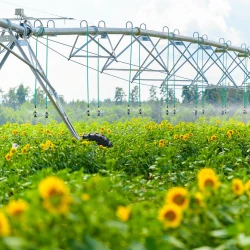
But we are determined to continue doing everything we can to produce the crops we need in Ukraine and that the world needs. For example, we have recently increased the area we irrigate in the Kyiv region as part of our investment in improved seed production. We are also planning to invest in anaerobic digestion plants, using farm products to produce domestic energy. And we are diversifying the crops we grow, both to meet market needs and to maximise our revenue.
This is a resilient business and we are working hard to stay productive. But we also need trade so we can continue providing employment and paying our taxes. And that hinges on our ability to export the goods we produce. Yet again, it comes back to the importance of the Grain Deal.
The very best outcome of the war would be for russia to withdraw all its troops from Ukrainian territory. Given their stubbornness and aggression, that is unlikely to happen voluntarily. A lesser outcome would be unblock of the Black Sea, which would make a significant difference to countries that used to import Ukrainian agricultural products. It would also help build Ukraine’s future while minimising the amount of aid the country needs.
Therefore, it is essential Ukraine’s grain exports continue. Our government will work with the Turkish government on the details of the military support. We also need the on-going support of the international community to make sure these essential supplies reach the people who so badly need them.