

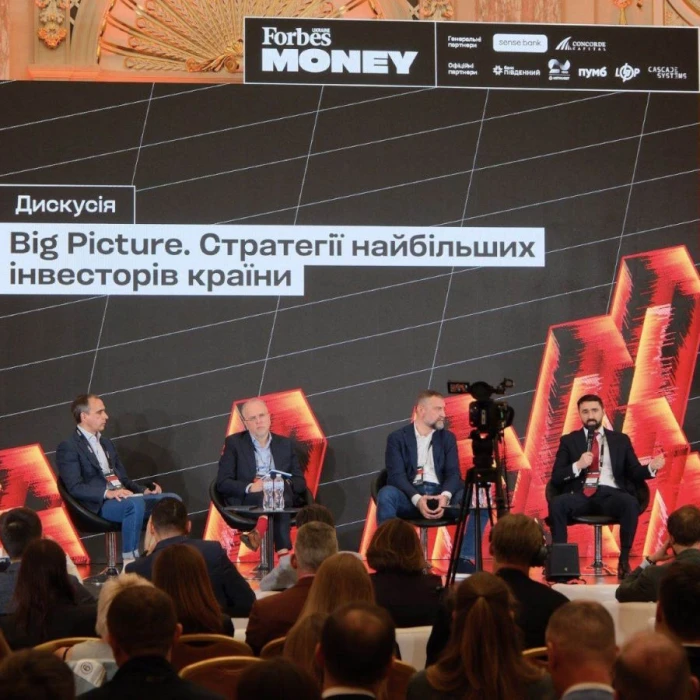
Representatives from SCM companies recently participated in the Forbes Money 2026 forum in Kyiv. The event brought together executives, investors, government officials, and international financial institutions to discuss capital management, business development, and operational opportunities in Ukraine during the war.
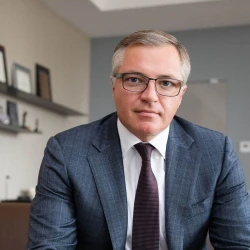
Oleksandr Vodoviz, representing our steel company Metinvest, and Sergii Chernenko, representing our bank FUIB, took part in the 'Big Picture: Strategies of the Country's Largest Investors' panel. The discussion, which also featured leaders from other major Ukrainian enterprises and the Minister of Finance, focused on long-term planning and resilience in a country operating under constant attack.
A central theme of the panel was the financial architecture required to sustain major industries. Sergii Chernenko provided crucial context regarding the banking sector, access to capital, and the shifting logic behind making large-scale financial decisions. The panel debated whether simplifying the regulatory environment or improving access to capital is more vital for businesses today. This dialogue was particularly relevant as companies frequently face financing rejections due to internal limits at state banks, making the perspective of major financial institutions essential to finding workable solutions.
Oleksandr Vodoviz highlighted the investment trajectory of Metinvest. Prior to 2022, the company was one of the largest private investors in Ukraine, allocating approximately UAH 40 billion ($1 billion) annually to asset development. Despite the ongoing war with russia and the loss of half of its business operations, the company maintains an average annual investment of UAH 10 billion to UAH 11.2 billion ($250-280 million). The current planning horizon is now two to three months, with funds directed towards preserving facilities, maintaining production capacity, and securing energy supplies.
Energy consumption remains a significant operational challenge. Metinvest is the largest electricity consumer in Ukraine, requiring about 1 GW of power. To mitigate the risk of blackouts, the company has installed gas piston power plants with a capacity of 29 MW and is planning to build 37 MW of solar power stations as backup generation.
Internationally, the strategic priority is the construction of a green steel plant in Italy, a core market where Metinvest already operates two facilities. This project is designed to integrate with the iron ore enrichment plants in Kryvyi Rih, which are currently operating at half capacity. The plan involves producing low-carbon hot-briquetted iron in Ukraine for supply to the Italian plant. Furthermore, the recent acquisition of a pipe plant in Romania will enhance operational synergy through the supply of hot-rolled steel from Zaporizhstal.
The panel also examined obstacles to future investment. Oleksandr Vodoviz identified the protectionist measures of the European steel market, such as quotas and the Carbon Border Adjustment Mechanism, as significant factors affecting planning. Both representatives from SCM companies emphasised that restricted access to international credit and internal banking limits hinder the financing of new energy generation. They concluded that expanded credit access, increased banking capacity, and the implementation of war risk insurance are absolutely necessary to attract institutional investors to Ukraine.