

The transition from military service to civilian life presents significant challenges, particularly for those who have sustained injuries. To address this, our energy company DTEK has presented a unique employment tool for Ukraine, designed to match people with disabilities, including veterans, with suitable roles at industrial enterprises. The tool is named MOZHU, which translates to "I can".
Developed to support veterans returning from the war with russia, MOZHU serves a critical function. It translates complex medical classifications into clear, practical language for industrial employers. By doing so, it combines a person's medical assessment, professional experience, skills, and functional capabilities with specific workplace conditions. A human resources specialist simply inputs data from a medical extract and selects a preferred region or facility. The system then automatically correlates this information to suggest appropriate vacancies.
This practical approach to barrier-free employment directly reflects the broader strategy of our shareholder Rinat Akhmetov. Across all SCM companies, there is a unified commitment to prioritising human capital, fostering inclusivity, and actively supporting the reintegration of our defenders into the workforce.
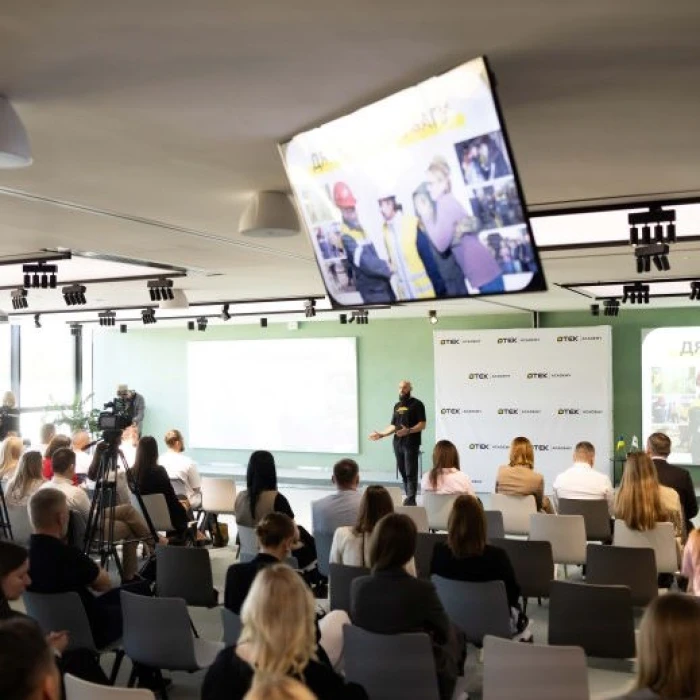
The presentation of MOZHU was shared with representatives from the state, the public sector, employment centres, and major Ukrainian employers. As a responsible employer, DTEK aims to share this experience to make the employment process for people with disabilities effective across the entire country. Government officials, including the Deputy Minister of Economy and the Deputy Minister of Veterans Affairs, have praised the initiative as a vital systemic step in removing societal barriers and facilitating a dignified return to civilian professional life.
Today, DTEK employs 104 veterans with disabilities. To accommodate them and future employees, the company conducted accessibility audits at 24 production facilities, covering surface mine operations, machine-building plants, and thermal power plants. These initiatives coincide with massive infrastructure efforts; for instance, DTEK recently allocated UAH 5 billion ($112.5 million) towards restoring and preparing enterprises for the upcoming peak seasons.
Within all these recovering facilities, creating inclusive spaces remains a priority. In 2025, a pilot project successfully established an inclusive space on the surface of a mine, allowing veterans who had lost limbs to return to essential maintenance roles and help sustain the national energy grid.
Since the full-scale invasion began, over 5,700 DTEK employees have joined the defence forces. Thus far, 500 have returned to their workplaces, and an additional 200 veterans from the broader labour market have joined the company.
MOZHU is more than a software tool; it is a shift in perspective. It focuses on what individuals can do, rather than what they cannot, ensuring that those who protected our country have every opportunity to rebuild their professional lives and continue contributing to the nation.