


On the night of 1-2 June, russia launched one of its largest combined attacks of the war, firing more than 700 drones and missiles at Kyiv and cities across Ukraine. Air defences intercepted the majority, but strikes still reached homes, civilian infrastructure and energy facilities. In Kyiv, DTEK's facilities were among the targets, and more than 140,000 homes lost power.
DTEK's response was immediate. Once the military and emergency services had cleared the sites, crews began restoration work and reconnected every affected customer in the capital. A further 23,500 families had their electricity restored in the Dnipropetrovsk region after related strikes. The cost was personal as well as material: two DTEK Kyiv Grids workers were injured as the attack was under way.
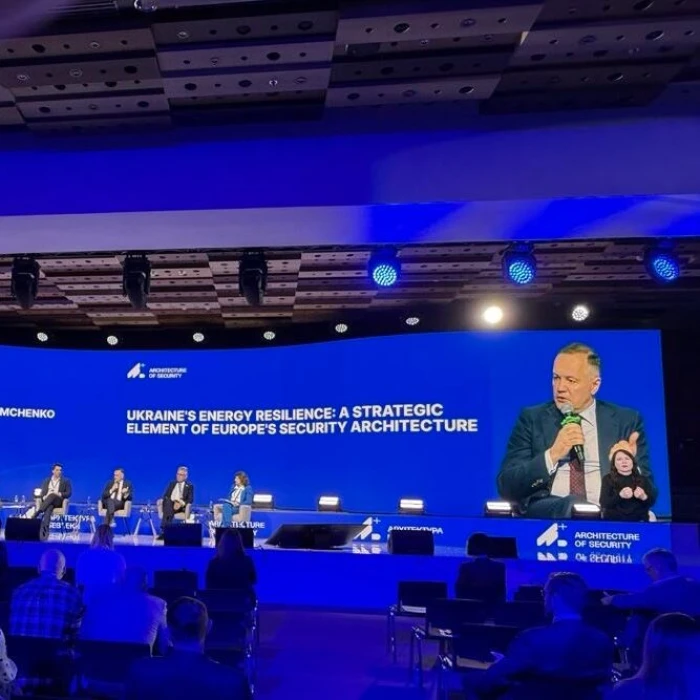
On the day before the attack, DTEK CEO Maxim Timchenko took this experience to the Architecture of Security conference in Kyiv. He warned that no country is fully prepared for a world in which critical infrastructure is treated as a target of war, and argued that Ukraine is showing Europe how energy systems must evolve in order to survive.
His central point was simple. Since 2022, DTEK has lost the majority of its generating capacity on several occasions, and each time it has rebuilt. What makes that possible, he said, is strong coordination, deeper European integration, decentralised energy, and, above all, people who refuse to give up.
The message is already reaching European decision-makers. Days before the conference, at the invitation of DTEK's partner E.ON, Mr. Timchenko set out for E.ON's networks leadership group what the targeting of critical infrastructure means in practice for European security. He was joined on the conference panel by First Deputy Prime Minister & Minister of Energy of Ukraine Denys Shmyhal and Geoffrey Pyatt, former US Ambassador to Ukraine and Chairman of DTEK's Advisory Council.
For SCM, DTEK's experience carries a wider significance. The ability to keep the lights on under sustained attack is not only a Ukrainian achievement. It is practical knowledge that a more exposed Europe now has reason to study. We are proud of the engineers, technicians and managers who deliver that resilience night after night.