

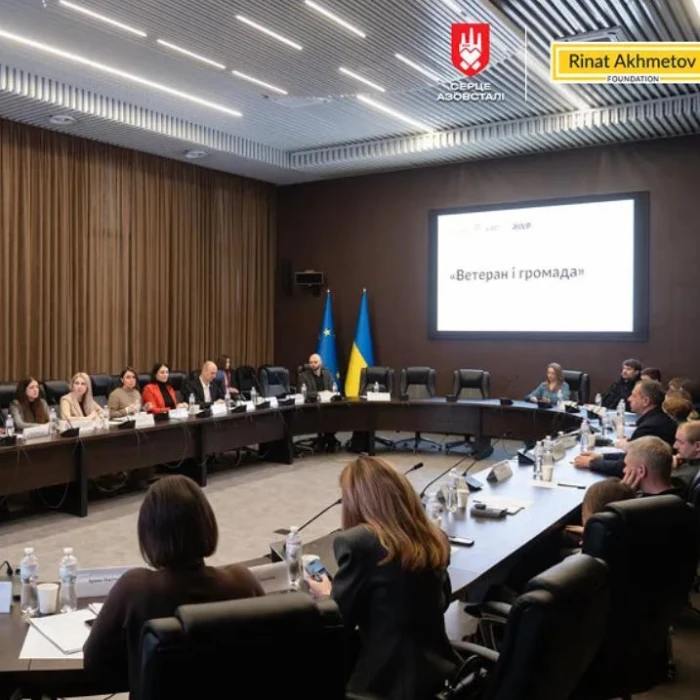
The results of the “Veteran and Community” study were presented in Kyiv, as part of a project run by the NGO Heart of Azovstal on the initiative of the Rinat Akhmetov Foundation. Researchers analysed 140 Ukrainian communities and found that the services veterans need already exist, but are often not connected into one system. The study recommends a clear support pathway for every veteran.
What did the study look at?
The study looked at how communities support veterans and their families. Researchers analysed 140 communities and carried out in-depth research in 12, including Bucha, Bila Tserkva, Poltava, Nizhyn and Kalush. The Lanka.CX team prepared it based on interviews, documents and official sources. It compares how work is organised locally and is not a ranking.
Why is it sometimes hard for veterans to get help?
The main problem is weak coordination between institutions. A veteran may go to a social services office, a hospital or an NGO, but after a referral it is not always clear who is responsible for the next step. Often the veteran has to coordinate the process alone. The quality of support also often depends on the personal efforts of individual specialists.
Does every community do things the same way?
No. The researchers identified four models: “The Conductor”, led by a strong leader; “The Well-Coordinated Orchestra”, where leadership, the team and veterans work together; “The Street Musicians”, where active community members take the initiative but have little influence on wider decisions; and “The Orchestra on Paper”, where formal programmes do not always become real practice.
What can communities do better?
From 116 local cases and 48 recorded areas for improvement, the researchers identified 42 recurring solutions and 27 typical mistakes. They recommend naming one person responsible for a veteran’s full support pathway, sharing information between institutions, linking programmes to real budgets and involving veterans in decisions.
What happens with the study now?
“In essence, we have systematised shared knowledge that already existed at the level of communities, the government, parliament and others. Now we are making this study public, together with a library of cases and a library of mistakes,” said Natalya Yemchenko, Chief Corporate Affairs Officer at SCM and Chair of the Supervisory Board of the Rinat Akhmetov Foundation and the NGO Heart of Azovstal.
The study is being handed over to the Ministry of Veterans Affairs of Ukraine and the Association of Ukrainian Cities. The pilot communities of Bucha and Kamianske will adapt its recommendations to local conditions.
Who is behind the project?
The project is run by Heart of Azovstal on the initiative of the Rinat Akhmetov Foundation, in partnership with Kyiv School of Economics and American Warrior Partnership, with support from the Ministry of Veterans Affairs.