

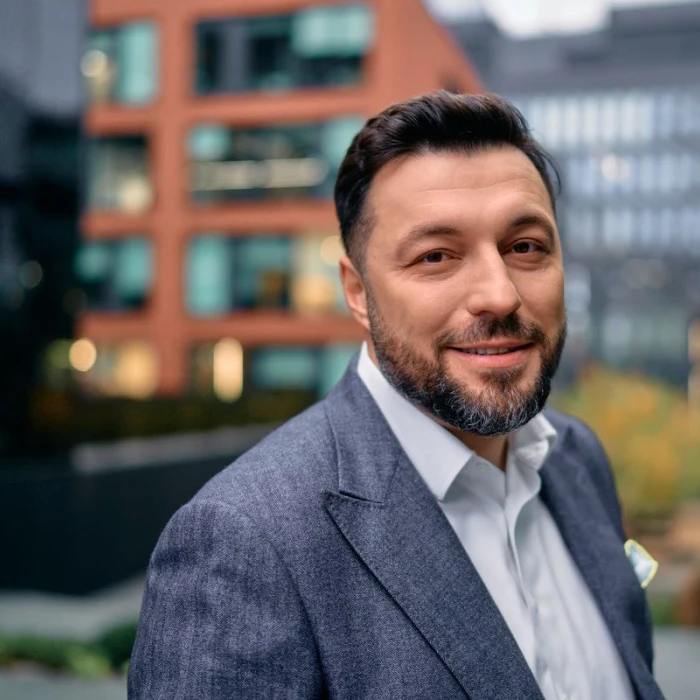
In most countries, flexible electricity demand develops slowly. In Ukraine, war and russia's attacks on civilian energy infrastructure have compressed that change into a few seasons. In a new article for Ekonomichna Pravda, Serhiy Kovalenko, General Director of YASNO, explains how households and businesses moved from an "always on" mindset to managed consumption — and why this experience matters for energy systems across Europe.
How has the war changed electricity consumption in Ukraine?
Before the full-scale invasion, electricity was a background service for most consumers. People switched on the lights, charged their phones and paid the bill; businesses opened their doors and assumed power would be there. After the first large-scale attacks on the energy system, that assumption disappeared. Electricity began to shape the rhythm of the day — working hours, production, logistics, study and daily life. Households started to plan when to charge devices and power banks, when to run a boiler or washing machine, and which appliances were genuinely essential at peak times.
What does demand response mean in practice?
In energy systems with a lot of variable wind and solar generation, this kind of behaviour is called demand response: the consumer reacts to the state of the grid and adjusts consumption accordingly. It usually takes years to develop, supported by incentives, tariffs, digital services and technology. As Serhiy Kovalenko notes, many Ukrainians began doing this without the technical vocabulary — simply because any other way of living had become difficult or impossible. Businesses changed too, looking more closely at their consumption profile: which processes are critical, what load can be shifted, how much an hour of downtime costs, and where back-up power, on-site generation or storage is required.
Why does this matter for Europe?
The Ukrainian experience should not be romanticised — it was formed in extremely difficult conditions, and that is precisely why it is valuable. Mr Kovalenko frames it as a fast-forward scenario for international audiences. The shifts that other countries are approaching gradually — an active consumer, flexible consumption, local generation, reserves, storage and digital energy management — have been accelerated in Ukraine by the war. With demand rising across the EU, the UK and the US on the back of data centres, AI, and the electrification of transport and heating, markets are becoming more volatile and systems need greater flexibility.
How is the role of energy companies changing?
A modern energy company can no longer be only a supplier of a resource. It has to explain what is happening in the system, provide tools to manage consumption, help customers assess risk, develop digital services and support decentralised generation. Mr Kovalenko points to YASNO Power EMS — a system for monitoring and automating the management of generation, storage and consumption — as an example of this shift, and signals readiness to build further customer-facing solutions. The wider message is that energy resilience now depends not only on power stations, networks and repair crews, but on how consumers themselves use energy.
YASNO is part of our energy company DTEK.
Read the full article by Serhiy Kovalenko in Ekonomichna Pravda (in Ukrainian)