

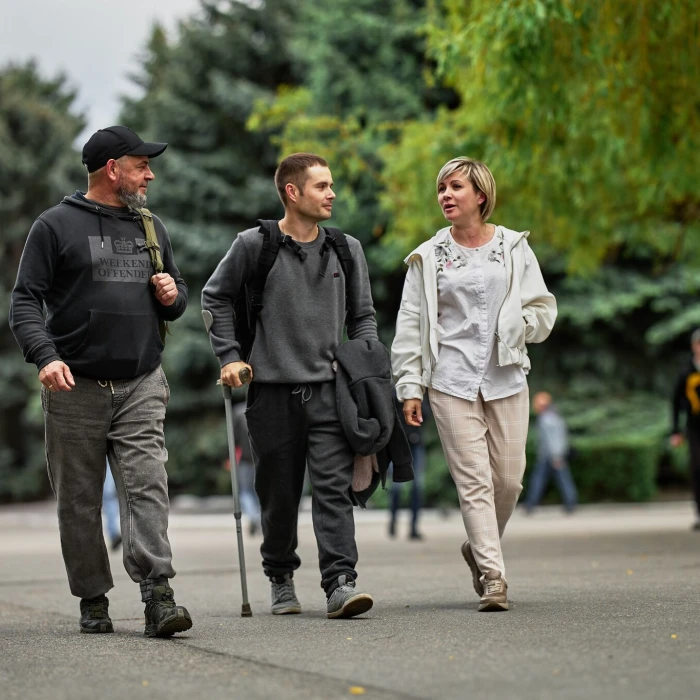
DTEK Energy has adjusted and equipped the aboveground territory of one of the company’s mines in Dnipropetrovsk Oblast to employ veterans with disabilities — for the first time in Ukraine.
This pilot project is part of a wider programme to support veterans of the Russo-Ukrainian war within the company’s enterprises, as more than 4,600 DTEK employees joined the Armed Forces of Ukraine to defend the country.
Creating suitable conditions for veterans with disabilities will allow them to realise their professional ambitions on an equal footing with others, secure employment, and earn a living. The initiative is primarily aimed at supporting those employees who joined the Armed Forces from within the company but, due to injuries sustained in service, are now having to return to civilian life. Currently, 315 veterans have returned to work at the company’s enterprises, including those who sustained disability because of the war.
“The number of veterans and people with disabilities due to the war is growing, and they will make up a significant part of the labour market. We need to be prepared for this and create decent and inclusive working conditions for them. We’re taking steps towards becoming one of Ukraine’s first large industrial companies to systematically create an inclusive environment for veterans with disabilities, promoting their employment and professional self-fulfilment,”
said Oleksandr Fomenko, CEO of DTEK Energy.
As part of the pilot project, every effort was made to make the workspace accessible and, most importantly, safe for veterans with disabilities, taking into account the widest possible range of injuries under the given circumstances. However, due to production and safety constraints, as well as the specific features of buildings and structures constructed nearly 50 years ago—when inclusivity was not a design consideration—not all spaces can be made fully accessible from scratch. In many cases, the focus is on adapting existing infrastructure. For this reason, the company is currently unable to offer roles to all categories of veterans with disabilities, such as individuals who use wheelchairs.
Following the pilot project, physical space audits have already been carried out at 9 of the 24 company sites planned for this year. Detailed recommendations have been prepared regarding the required adaptations and improvements. To support this, training sessions were conducted with a respected external accessibility consultant for staff members directly involved in delivering the initiative on the ground.
The company is also in the final stages of developing a universal tool—a job catalogue designed to support the employment of veterans with disabilities, which will be implemented across all company enterprises.