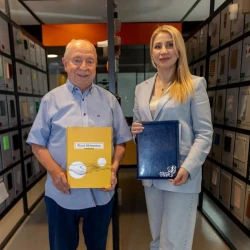


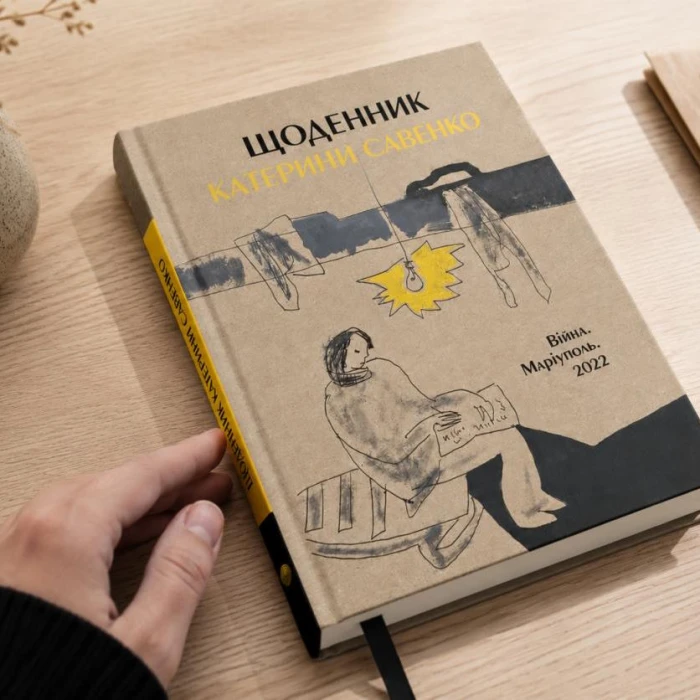
The diary of Kateryna Savenko, a resident of Mariupol who began writing on the first day of the full-scale invasion, has become part of the immersive installation "Spomyny" by Ukrainian artist Sophia Bulgakova. The installation will be presented at the 83rd Venice Film Festival in the Venice Immersive programme, which this year brings together 68 immersive works from 26 countries. The diary is held in the Museum of Civilian Voices of the Rinat Akhmetov Foundation, a partner of the project. For the festival, an audio version of the diary was recorded by Ukrainian actress Dariia Tvoronovich.
What has been included in the Venice Film Festival programme?
The immersive installation "Spomyny" by Ukrainian artist Sophia Bulgakova has been selected for Venice Immersive, the immersive media programme of the 83rd Venice Film Festival. "Spomyny" is part of the 10th anniversary edition of the programme, alongside 68 immersive works from 26 countries. The installation explores personal and collective memory of the war through voices, sounds and personal testimonies. For the presentation in Venice, it has been extended with an audio version of the diary of Kateryna Savenko from Mariupol, Donetsk region.
Who was Kateryna Savenko?
Kateryna Savenko was a resident of Mariupol who started her diary on the first day of the full-scale invasion. She recorded the life of the city, her own experience and the daily struggle to survive. Before her death, she asked her sister to find the notes and tell the world the truth about Mariupol. Her diary is now kept in the Museum of Civilian Voices of the Rinat Akhmetov Foundation and becomes part of an international art project about memory, the experience of war and the power of human testimony.
What is the "Spomyny" installation?
"Spomyny" is a many-voiced work created from personal and collective testimonies of the years of the full-scale war, which the artist collected in the form of sound artefacts. The installation is built from metres of insulation pipes.
"Opening one channel at a time and layering the sounds on top of each other through the pipes, visitors enter a non-linear story woven from my own intimate experiences. The voice of Kateryna Savenko, written down in her diary from Mariupol, now joins this many-voiced work," explains the author of the project, Sophia Bulgakova.
Why is the Museum of Civilian Voices part of the project?
The Museum takes part so that the testimonies it holds can reach audiences outside Ukraine.
"For the Museum of Civilian Voices, it is important to preserve testimonies and to give them the chance to be heard far beyond Ukraine. Including the diary in 'Spomyny' allows Kateryna's voice to be heard internationally. Her personal testimony becomes part of the memory of what Ukrainians have lived through during the war," says Natalya Yemchenko, SCM Chief Corporate Affairs Officer and Head of the Supervisory Board of the Rinat Akhmetov Foundation.
What is the Museum of Civilian Voices?
The Museum of Civilian Voices of the Rinat Akhmetov Foundation is the largest archive in the world of testimonies about russia's war against Ukraine. It holds more than 145,000 stories of civilians who have suffered because of the war. The museum collects and preserves these accounts so that they can be heard today and studied in the future.