

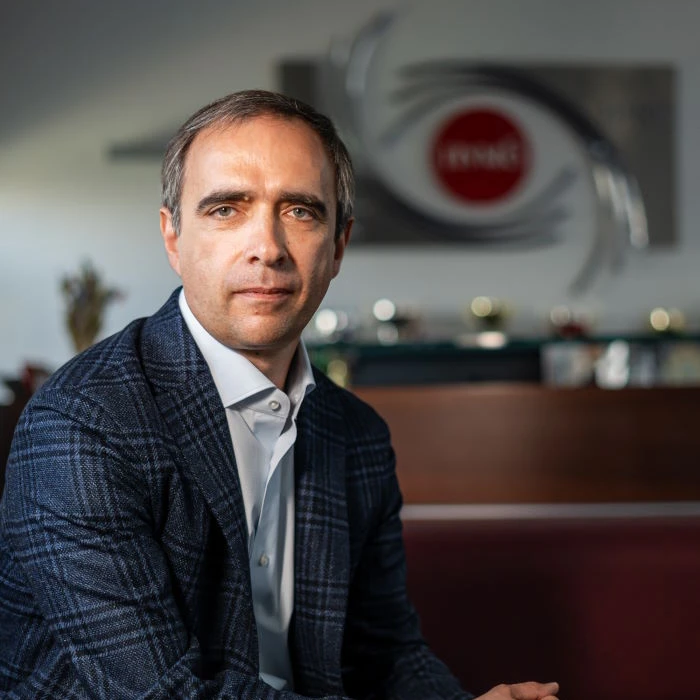
Serhiy Chernenko, Chairman of the Board of First Ukrainian International Bank (FUIB), told "Top managers who keep the country running", an event held by NV, a leading Ukrainian media group, that Ukrainian business has learned to operate with a much higher level of risk during the full-scale war, and that the banking system has learned to adapt quickly. FUIB is supporting clients in agriculture and steel through debt restructuring and additional working capital, and is preparing scenarios in which farmers cannot export their products. Mr Chernenko also said Ukraine's banking sector could become one of the most attractive areas for investors once the war ends, and that artificial intelligence could cut at least 30% of the bank's current costs.
How has FUIB changed the way it is managed?
FUIB began rebuilding its management model before the full-scale invasion, after concluding that a centralised system works poorly in a fast-changing world. The bank moved to a more flexible model in which authority and resources were passed to teams and planning became more adaptive. This gives employees more scope to take decisions themselves and to respond quickly to change.
The war changed the way the bank organises work for different groups of staff. FUIB takes account of the different needs of employees who work in branches and those who work online, and gives extra holiday days to staff working in the field, because that work is more tiring. Mr. Chernenko said there is now a more tolerant attitude to tiredness, and that senior managers who are used to high levels of stress need to recognise that their teams do not have to work in the same way.
He added that the bank's readiness to work with higher risks has grown significantly, which he had not expected before the war. The experience of overcoming difficulties has turned into an ability to manage a higher level of risk. The 2014 crisis, when FUIB evacuated teams from Donetsk, where the bank had a large office and data centres, was an important lesson in business continuity and in the psychological resilience of the team. COVID-19 accelerated technological change, while the experience of 2014 had a much greater effect on the team's readiness for large-scale tests.
What are the main risks for the Ukrainian economy?
Serhiy Chernenko named agriculture as one of the main risks, in particular problems with exports and falling prices. He considers smaller companies especially vulnerable, as they have less financial strength than large ones. FUIB is already preparing scenarios in which farmers are unable to export their products and face lower prices. In that case the bank is ready to postpone payments on loans that are usually repaid after seasonal stocks are sold.
"We are ready to hold these assets together with you and wait for the right opportunity to sell them," the CEO of the bank explained.
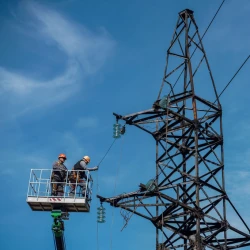
Steel is also in a difficult position because of russian strikes and logistics problems, with exports on European routes significantly increasing transport costs. FUIB's own statistics on strikes against client companies show a negative trend, with the number of such cases rising month by month. The bank is responding by working with clients on debt restructuring and additional working capital where this is needed to maintain their cash flow.
Which sector does FUIB see as the most encouraging?
Serhiy Chernenko named the development of Ukrainian military technology as one of the most encouraging developments of recent times. Over roughly the past year the scale of the industry has grown significantly. Visiting companies, he sees how quickly Ukrainian producers change their products, design new solutions, adapt and localise production. State programmes for interest rate compensation, investment financing and state guarantees allow banks to share the risks. Despite high war risks, clients in this sector manage those risks effectively: there have been cases of strikes on client companies, but no cases where a company stopped operating, defaulted or closed as a result.
What is the outlook for Ukraine's banking sector after the war?
The investment attractiveness of the banking system could increase significantly. Serhiy Chernenko said the sector has already gone through a large-scale transformation in terms of institutional quality, and that competition is high with major international banks present in the market. The recovery of the Ukrainian economy will automatically create new opportunities for banks, as growing investment increases demand for banking services and financing. He criticised the tax burden on banks, saying that if the state continues to apply a 50% tax, this could hold back the arrival of new players.
Artificial intelligence is another key factor. FUIB has developed a strategy for introducing AI and estimates potential savings of at least 30% of current costs, with a possibly greater effect in future. The bank sees the greatest potential for automation in the contact centre, CRM systems, the processing and analysis of client information and the development of new products. The product development cycle currently takes about two weeks, and AI agents could in time reduce this to one day. Because FUIB works with personal data and must meet many regulatory requirements and internal controls, the introduction of AI is more careful than in many other fields.