This week, Maxim Timchenko, CEO of SCM's energy company DTEK, met international partners in Warsaw and Berlin. In Warsaw, he met US Energy Secretary Chris Wright to discuss US investment and the protection of Ukraine's energy infrastructure this winter. In Berlin, he held talks with Siemens Energy CEO Dr Christian Bruch and spoke on stage with Masdar CEO Mohamed Jameel Al Ramahi. The common aim was to build a stronger and more resilient energy system for Ukraine during the war.
What did DTEK's CEO talk about with the US Energy Secretary?
Mr Timchenko and Secretary Wright discussed two priorities: investment and protecting Ukraine's energy system this winter. They met at the seventh Partnership for Transatlantic Energy Cooperation (P-TEC) in Warsaw, Poland. The event was convened by the US Department of Energy, the Polish Ministry of Energy and the Atlantic Council Global Energy Center.
On investment, he pointed to support from the US International Development Finance Corporation for DTEK's battery energy storage project with Fluence as an example of how US backing can attract investment. They discussed building on this by partnering with US companies on projects such as gas turbines and the development of Ukraine's largely untapped gas fields.
Why does this winter matter so much?
Russia is escalating its attacks on Ukraine's energy facilities, and there is a growing risk of a humanitarian crisis this winter. Mr Timchenko thanked the US for its vital support to date, including air defence systems and US-made equipment that helps DTEK teams repair damage and keep the power flowing. He added that the US can play a key role in helping to secure an energy ceasefire.
"I am deeply grateful to Secretary Wright for his support and partnership, and for recognising the energy powerhouse that Ukraine will become," said Mr Timchenko.
What happened in Berlin?
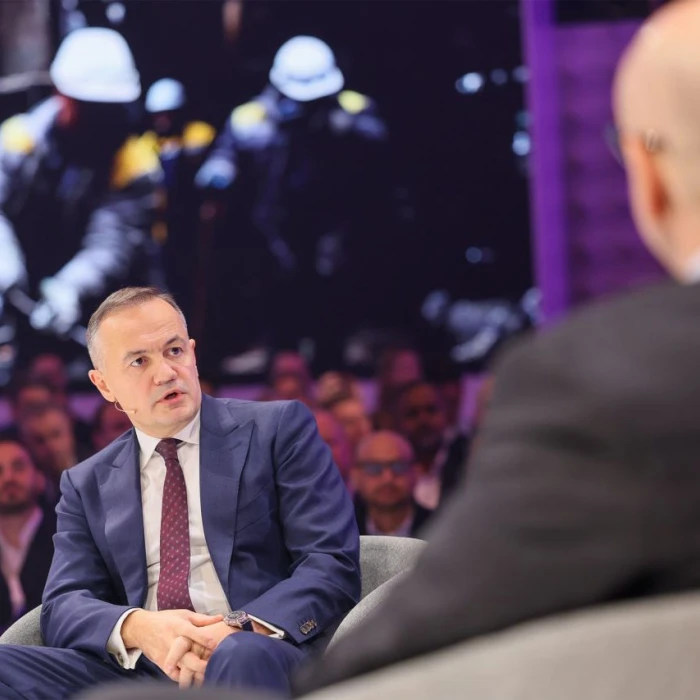
In Berlin, Mr Timchenko discussed future cooperation with Dr Christian Bruch, President and CEO of Siemens Energy. He then joined Mohamed Jameel Al Ramahi, CEO of Masdar (Abu Dhabi Future Energy Company), on stage at a business conference. The discussion asked how companies can keep making long-term decisions when technology, markets and geopolitics change so quickly.
"Ukraine's experience has taught the world that risk cannot be eliminated. You have to build resilience into the system, to absorb shocks, adapt and recover quickly," said the DTEK CEO.
How do international partners help Ukraine's energy resilience?
For DTEK, resilience means investing with strong international partners across a broad mix of technologies, from wind farms and battery storage to flexible gas-fired power plants. Mr Timchenko sees significant potential for Siemens Energy and Masdar to be part of the next phase of Ukraine's energy development. This week's talks were another step in exploring what that partnership could look like.