

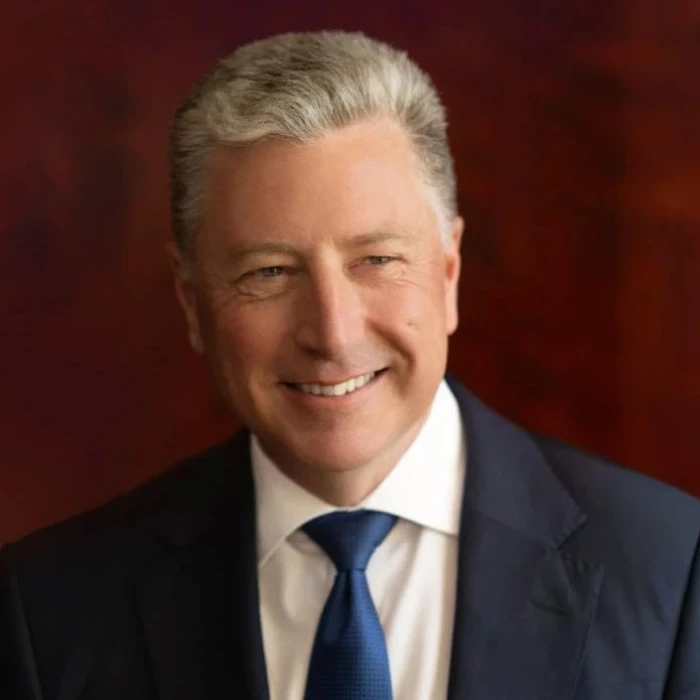
DTEK, part of SCM, has appointed Ambassador Kurt Volker to its Advisory Council. Ambassador Volker is a former US Special Representative for Ukraine Negotiations and a former US Ambassador to NATO. He joins as DTEK accelerates investment in Ukraine's energy system and expands its presence in European energy markets. His appointment reflects a wider approach at SCM, set by our shareholder Rinat Akhmetov, of building international partnerships that support Ukraine's resilience during the war and its sustainable recovery.
Who is Kurt Volker?
Kurt Volker served as US Special Representative for Ukraine Negotiations from 2017 to 2019, leading US diplomatic efforts to support Ukraine. Earlier in his career he was US Ambassador to NATO and Acting Assistant Secretary of State for European Affairs, and he held senior positions at NATO and in the US Senate. He also founded and led the McCain Institute for International Leadership at Arizona State University, where he focused on democratic governance, global security and leadership.
What will he do on the DTEK Advisory Council?
Ambassador Volker joins the Council as DTEK accelerates investment in Ukraine's energy system, bringing decades of experience in transatlantic security, diplomacy and international economic policy. As a member of the Advisory Council, he will provide strategic guidance on energy security, reconstruction, international investment and the strengthening of partnerships between Ukraine and the United States.
Commenting on his appointment, Kurt Volker said:
"DTEK has proven itself to be a vital component of Ukraine's energy security, as well as a major player in European energy markets generally. I am delighted to join the Advisory Council at a critical moment for both Ukraine and Europe: helping Ukraine grow stronger despite russian attacks; and helping the EU grow stronger through closer integration with Ukraine. I look forward to supporting DTEK's efforts to sustain Ukraine's energy security in the short-term, build new energy systems for the medium-term, and all the while strengthen its presence as a major investor and energy trader in the EU for the long term."
DTEK CEO Maxim Timchenko said:
"Kurt Volker has been a longstanding advocate for Ukraine and one of the most respected voices on transatlantic security. His experience will be invaluable as Ukraine moves from resilience to recovery and works to attract the long-term investment needed to rebuild its energy system."
Who else sits on the DTEK Advisory Council?
The Council brings together internationally recognised policymakers, economists, diplomats and industry experts to provide independent strategic advice on Ukraine's energy security, economic recovery and integration with international markets. Its members include Ambassador Geoffrey Pyatt, Chairman of the DTEK Advisory Council and former US Assistant Secretary of State for Energy Resources and former US Ambassador to Ukraine and Greece; Dr Anders Åslund, economist and leading authority on Ukraine's economic transformation; Kuninori Matsuda, former Japanese Ambassador to Ukraine; Miriam Maes, energy transition expert and former Chair of the Supervisory Board of the Port of Rotterdam; Pascal Lamy, former Director General of the World Trade Organization and Vice President of the Paris Peace Forum; and Pierre Heilbronn, former French Presidential Special Envoy for Ukraine's Relief and Reconstruction and former Vice President of the European Bank for Reconstruction and Development.
Why does this matter for Ukraine's recovery?
Ukraine's energy system remains under attack, and rebuilding it will require capital, expertise and political trust from partners abroad. Drawing senior international figures into the governance and advisory structures of SCM companies is a deliberate strategy of our shareholder Rinat Akhmetov, intended to connect Ukrainian businesses with the international networks that will finance and shape the country's recovery. Ambassador Volker's appointment strengthens that link with the United States at a moment when Ukraine is moving from wartime resilience towards long-term reconstruction.