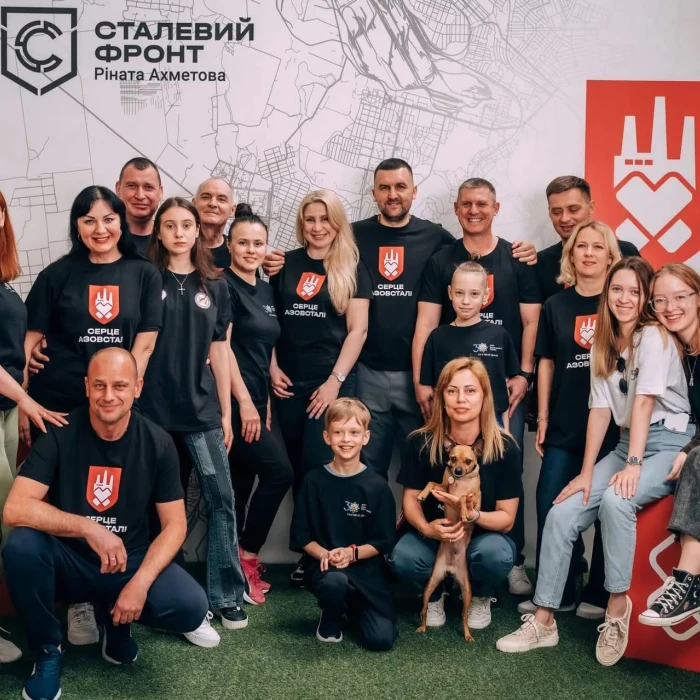
On 22 October 2026, Heart of Azovstal, a project of the Rinat Akhmetov Foundation, took part in the forum "Preserving and Restoring Human Capital in Wartime" in Kyiv. Director Tetiana Maltseva and post-traumatic growth trainer Serhii Yarovyi explained how the organisation supports defenders of Mariupol after release from captivity. Support covers every stage, from help for families to medical care, housing and work. Heart of Azovstal has already supported 8,000 defenders of Mariupol.
What was discussed at the forum in Kyiv?
Heart of Azovstal shared its experience of supporting defenders of Mariupol after captivity. Tetiana Maltseva, Director of the NGO Heart of Azovstal, and Serhii Yarovyi, a post-traumatic growth trainer, spoke on the panel "How not to lose a person after captivity".
What kind of support do defenders need after captivity?
Defenders who return from captivity face a long process of recovery. Russia's full-scale war has created new challenges for preserving Ukraine's human capital. After what they have experienced, released defenders need to restore their health, adapt to changes in themselves and the world around them, rebuild relationships with their loved ones and find new direction in life.
How does Heart of Azovstal help former POWs?
Heart of Azovstal supports the defenders of Mariupol through one complete system that covers each stage of the return to civilian life. Work begins before a defender returns, with support for the family, who also need to prepare for the meeting and the adaptation that follows. After release, the main elements are medical and psychological care, housing, career guidance, employment and opportunities for self-realisation.
"We understand that a veteran needs not a single service at a specific moment, but support at different stages – from return from captivity to recovery and self-realisation. The entire Heart of Azovstal support system is based on post-traumatic growth (PTG) approaches. It is not about forgetting what you have been through, but about the opportunity to rethink the experience, find new meaning and support, and gradually regain control over your own life. Recovery should lead to the next step – the opportunity to work, realise yourself, build the future and take an active part in the life of the community," said Ms Maltseva.
Why does it help to meet someone who has been through the same thing?
Support from people with similar experience gives released defenders hope. Heart of Azovstal's post-traumatic growth trainers work on a peer-to-peer principle: they have been through captivity themselves and support others with both professional knowledge and their own example. Mr Yarovyi, a defender of Mariupol, said it is important to involve these trainers as early as possible, while defenders are still in hospital.
"After captivity, it is very hard to believe that someone can really understand what you have been through. That is why support from another veteran is so important – a person who knows this experience not from someone else's words. When there is someone beside you who has also been through captivity and today lives a full life, it gives hope. We meet released defenders while they are still in hospital, hold meetings and training sessions, support them during adaptation and help them take their first steps into a new life," said Mr Yarovyi.
How many defenders has Heart of Azovstal supported so far?
Heart of Azovstal has already supported 8,000 defenders of Mariupol, directly or through help to their families. The organisation develops the post-traumatic growth approach so that support goes beyond dealing with the effects of what defenders have experienced, and helps them find new opportunities, regain independence and build their future.