

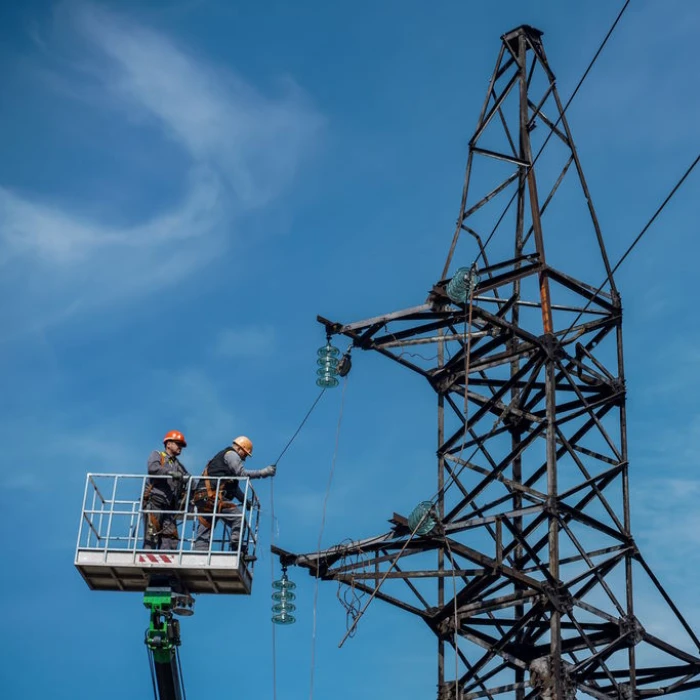
The Economist has published a report from Kyiv on Ukraine's preparations for the coming winter, featuring our energy company DTEK, which runs the capital's grid. The newspaper finds that Ukraine has never been better prepared. The programme to strengthen the grid is ahead of schedule, with half the works already complete, and the country should enter the winter with surplus generation capacity and 14bn cubic metres of gas in storage. The article follows a repair crew in Bereznyaky, Kyiv, as it replaces old cable with lines able to resist russian attacks.
What did The Economist report?
The Economist reported from Kyiv on 1 September 2026 that Ukraine has never been better prepared for russian attacks on its energy system. An unprecedented programme to harden the grid is running ahead of schedule. Alongside surplus generation capacity and 14bn cubic metres of gas reserves, the country now has better physical protection at key nodes of the grid and new private air-defence companies.
Who does the work on the ground?
The article opens with a utilities repair crew in Bereznyaky, on Kyiv's left bank, led by foreman Roman Kravchenko. The crew is digging out hundreds of metres of Soviet-laid cable and replacing it with thicker lines that can withstand an emergency surge. Mr Kravchenko is cutting no corners. He knows what failure feels like: last winter, after russian missiles destroyed the local heating plant, residents switched to electric home heaters that burnt out the network, and hundreds of apartment blocks had no heat or power for weeks.
How is Ukraine protecting the grid this year?
Since April, the government and energy companies have been carrying out a resilience plan with four priorities: local generation capacity for critical infrastructure in each major city; physical protection of crucial elements; decentralised heating; and a decentralised supply of electricity. The State Restoration Agency has shielded two dozen of Kyiv's 110-kilovolt transformers with netting and concrete reinforcements, and is fortifying power plants. Serhiy Sukhomlyn, the agency's director, says the new defences should withstand anything short of a direct missile hit. Oleksandr Kharchenko, an energy expert quoted by The Economist, says: "By December we will have done three times more than in any year before."
What does DTEK say about the winter ahead?
Maxim Timchenko, chief executive of DTEK, says that unfortunately no one can guarantee that last year's problems will not be repeated as russian air attacks “have set monthly records for the last four months”. DTEK runs the grid that serves Kyiv, and its crews carry out repairs after every attack.
How does this fit into SCM's approach?
This work reflects the strategy of our shareholder Rinat Akhmetov: to keep investing in Ukraine's wartime resilience, so that homes, hospitals and businesses keep power through the winter. The last word belongs to the DTEK crew in Bereznyaky. "We'll have done our work, that's all we can do," says Foreman Kravchenko. "Now it's down to the guys in air defence."