

Situation
HarvEast is not new to this war. As of 2011, it had 204,000 hectares of land, much of it in the Donbas region of southeastern Ukraine. In the first Russian invasion in 2014, it lost 55,000 hectares.
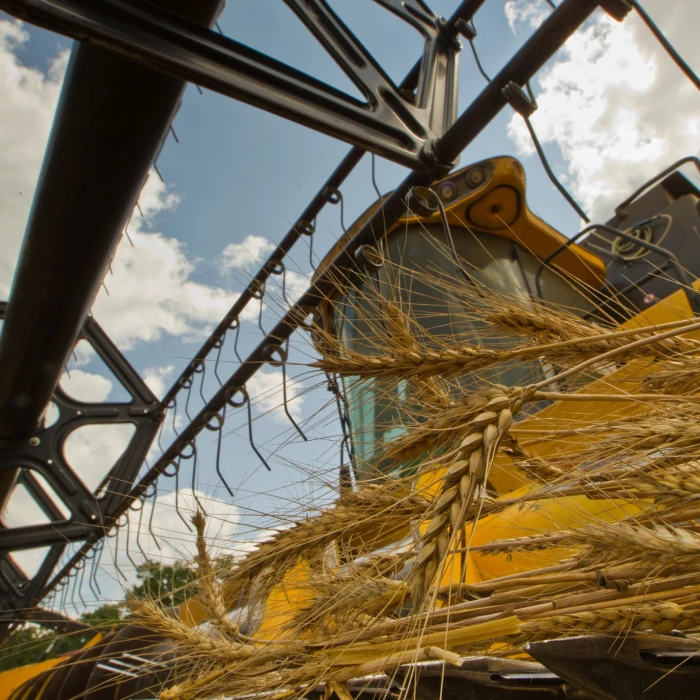
By 2021, HarvEast was growing again: employing 1,200 people, plus another 700 seasonal workers, working across 127,000 hectares. The company produces wheat, sunflower, pulses, corn, various seeds, and dairy products. With the renewed full-scale invasion of Ukraine in 2022, Russian forces almost immediately overran another 95,000 hectares, which included stealing more than 50,000 tonnes of grain stored from the previous harvest.
Loss of farmland was not the only direct impact that the war had. After the February 2022 full-scale invasion and until August 2022, Russian warships were blockading Ukrainian ports in the Sea of Azov and Black Sea. This drastically slowed exports, to the point that the lack of Black Sea ones contributed to a worldwide food crisis, exacerbated by the lingering effects of the COVID-19 pandemic and extreme weather patterns globally. The global energy crisis, also provoked by the war, compounded the issues. Alongside HarvEast and other Ukrainian farmers, the main losers were the planned recipients of the food in Africa and elsewhere in the Global South.
The new reality has added a layer of complexity to every aspect of HarvEast’s operations. From the onset of the invasion to the end of 2022, the company estimated that the occupiers had stolen up to US$250 million worth of crops in the Donetsk region alone. However, HarvEast, its leadership and its employees have prevailed, and plans are in place for various scenarios.
Ukraine’s agricultural industry is critical for the country’s economy. Before the war, it accounted for 20% of Ukraine’s GDP and around 15% of total employment. Ukrainian farmland is among the most fertile in the world, and the agriculture industry ranges from small family farms to large-scale industrial ones with hundreds of thousands of hectares of land.
Keeping the industry going is fundamental for Ukraine’s economy, as well as for feeding the world. As such, HarvEast has had to find ways to keep producing food, employing people and paying taxes.
Operational Resilience
The ongoing war adds layers of complexity to any Ukrainian company’s operations, and this is especially true for HarvEast as an agricultural producer. There are challenges on every level: from the obvious ones of continuing to farm close to a war zone, to working through financial and payment issues with suppliers. Due to the declaration of martial law in Ukraine, field work at night and the use of drones for surveys have been prohibited. Power outages caused by Russian attacks targeting Ukrainian infrastructure have also impacted farmers’ ability to use electric equipment, notably dryers.
Some of this was alleviated in July 2022, when the Russian and Ukrainian governments agreed a deal allowing Ukrainian agricultural exports to go through a corridor on the Black Sea. The Black Sea Grain Initiative enabled some of the stored grain to be exported, albeit still at a reduced rate than pre-war levels. It lasted for one year, until Russia unilaterally withdrew from the Initiative.
HarvEast is not waiting to depend on what the Russians decide next. It has already adjusted its strategy to keep employees active and maintain contributions to Ukraine’s wartime economy. Instead of relying on high-yield mass-produced crops with small margins, such as barley, winter wheat and corn, it has shifted focus.
HarvEast now produces lower-yield crops, such as mustard, linen, and hemp, that can be sold at higher prices, enabling it to keep moving forward. This also provides a solution to the issue of limited and expensive exports. Lower tonnage means more flexibility on transportation routes. And if the Russians force more ports to close, there are more options to shift to rail or truck.
HarvEast also has a key asset to rely on: its strong international business reputation. When shifting a business so significantly, it can be hard to make new connections and secure buyers. While a shift in production is complex and difficult to manage, having a strong reputation has enabled the company to find reliable partners, ensuring business continuity.
HarvEast’s strategy of flexibility means that it is constantly evolving, seeking the best opportunities for the business and continuity. Its leadership is constantly looking for good growth opportunities, such as the potential to export more finalised products, rather than raw goods.
Ultimately, the success of Ukraine’s agricultural sector will be directly tied to the country’s military victory. Until that time, HarvEast and other companies in the sector will continue to innovate and adjust to survive.