

Situation
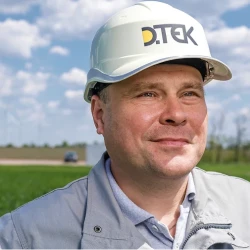
One business operating at the forefront of the war is DTEK Group, Ukraine’s largest private energy provider.
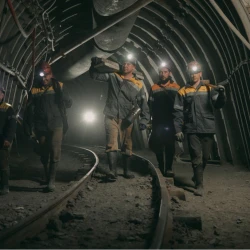
For almost 20 years, DTEK’s 55,000 employees have extracted coal and natural gas, produced electricity at wind, solar and thermal power plants, traded energy resources on Ukrainian and international markets, supplied electricity to consumers and provided energy-efficient services to customers.
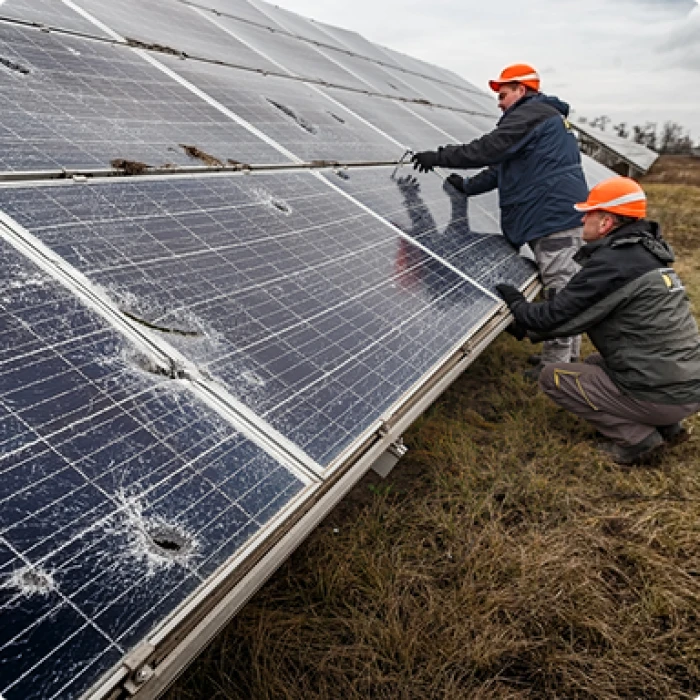
In a war where Russia is deliberately targeting Ukraine’s energy infrastructure, DTEK is directly in the line of fire. With the invasion, its overriding mission became the need to keep Ukraine supplied with power, while simultaneously building an energy system that could withstand future attacks.
Resilience Today
From the outset of Russia’s full-scale invasion, DTEK has been on the front line of an energy war without parallel in modern history. Moreover, since spring 2024, attacks by Russia have multiplied dramatically. The group’s power plants are being pounded almost weekly by high-precision supersonic and hypersonic missiles, as well as drones.
Against this backdrop, DTEK engineers are working tirelessly to restore electricity generation and distribution. Meanwhile, the group has increased its diplomatic efforts to find the funding and parts necessary to buy replacement equipment and rebuild the infrastructure destroyed by Russian missiles.
Since the beginning of the war, DTEK has been mobilising rapidly in the cities and villages targeted by Russian attacks. To date, it has restored power to more than 11 million consumers. In July 2024, when Russia cynically bombed Kyiv’s Children’s Hospital, DTEK power engineers immediately moved in and replaced the hospital’s destroyed substation.
Resilience Tomorrow
While the priority remains keeping the power on today, DTEK understands Ukraine’s urgent need to create an energy system that is resilient against future aggression and can play an important role in Europe’s ‘green’ energy revolution.
One of the ironies of invasion by Russia, a major hydrocarbon producer, is that it has turbocharged Ukraine’s transition to ‘green’ energy. Missile attacks have brutally exposed the vulnerability of conventional power generation: just one missile can destroy an entire power unit, whereas it would take many high-precision missiles to destroy the same wind or solar capacity.
DTEK is already Ukraine’s largest investor in renewable energy. Now it is committing further, with an ambitious programme of investment in wind, solar, smart grids and battery storage.
Leading the charge is DTEK’s renewables business. When the full-scale war broke out, it had already begun building phase I of Tyligulska Wind Power Plant. Despite foreign workers having to leave the Black Sea site in February 2022, Ukrainian teams finished the job a year later, delivering 114 MW of clean, resilient power to 200,000 homes. DTEK is now finalising preparations for phase II, which will quadruple Tyligulska’s capacity to 500 MW and provide energy for 900,000 homes.
DTEK is working with international financial institutions and foreign export credit agencies to access capital for numerous projects, including Tyligulska II.
DTEK is also looking westwards. From the moment that Ukraine disconnected its grid from Russia on the day of the full-scale invasion, Europe became both the country’s energy lifeline and a potential future market for ‘green’ power. Ukraine has huge potential to become a major ‘green’ energy exporter given its vast land, strong wind and sun and talented workforce.
DTEK intends to play a strategic role in integrating the Ukrainian and European energy markets. Through its European renewable energy arm, DRI, the company has begun operating in Croatia, Italy, Poland and Romania, with seven projects totalling 891 MW at various stages of development.