

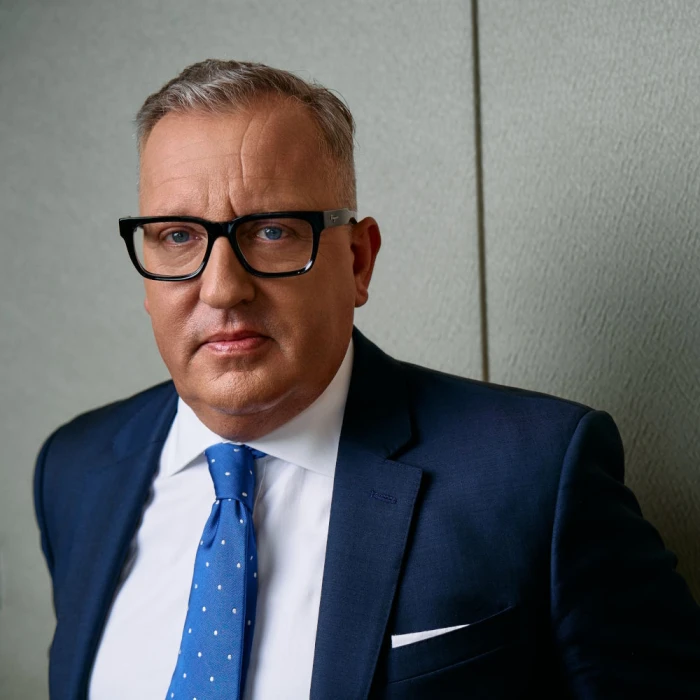
Ukraine's reconstruction and recovery is now estimated to cost $588 billion over the next decade, according to the World Bank, the UN, the European Commission and the Ukrainian government. Speaking at the Economic Forum in Karpacz, Poland, on 9 September 2026, Jock Mendoza-Wilson, Director of International and Investor Relations at System Capital Management (SCM), said that reconstruction is not a task for after the war. SCM companies have invested $4.3 billion in Ukraine since 2022, including $1 billion directly into restoring energy and industrial assets destroyed by russia. Companies owned by our shareholder Rinat Akhmetov have paid $9.3 billion in taxes and fees since the start of the full-scale invasion.
How much will Ukraine's reconstruction cost?
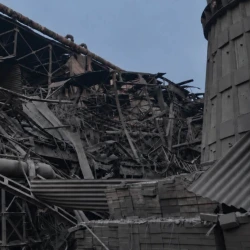
As of February 2026, the estimated cost of Ukraine's reconstruction and recovery over the next decade is $588 billion, according to a joint assessment by the World Bank, the United Nations, the European Commission and the Ukrainian government. Even before the most recent destruction, that figure was roughly three times Ukraine's projected 2025 GDP. russia continues to attack critical infrastructure. The level of destruction and civilian casualties is without precedent in nearly five years of war, so the real figure is higher today.
Who will pay for it?
Donor governments and international institutions remain willing to support Ukraine, but they face slow growth, higher energy prices and domestic demands on their budgets, including defence. Of all the partners involved in Ukraine's recovery, the private sector is the most important. Ukrainian private business and international investors already present in the market are financing recovery now, during the war, rather than waiting for it to end.
What is SCM investing in?
SCM companies have invested $4.3 billion in Ukraine since 2022, of which $1 billion has gone directly into rebuilding power plants, substations, grids and industrial infrastructure damaged or destroyed by russia. Our energy company DTEK completed the 500 MW Tyligulska wind power plant in Mykolaiv region, southern Ukraine, the largest wind power plant in the world built during wartime, and has announced plans to build the 650 MW Poltavska wind power plant. The wider contribution includes new construction, the modernisation of enterprises, production development and infrastructure investment. Companies owned by Rinat Akhmetov are among the largest employers and taxpayers in Ukraine, and have paid $9.3 billion in taxes and fees to budgets at all levels since the start of the full-scale invasion.
Why does investing during the war matter internationally?
It shows that Ukraine's private sector is an active driver of reconstruction and not only a recipient of aid. It demonstrates real investor confidence during wartime. It is a model of public and private resilience, in which business sustains the economy while the state receives taxes and resources for defence. And it sends a clear signal to international partners: reconstruction has credible domestic investors behind it already.
What happens the day after a ceasefire?
Peace with russia is unlikely to arrive as a neat package. The early stages will be uncertain, and Ukraine will need investors who can work in a risky operating environment. The companies already active in Ukraine, across critical minerals and resources, energy, agriculture, technology, construction materials and defence, will be the economic first responders. They have projects that can start quickly. Investors with no experience of Ukraine, however well intentioned, will need time to hire teams, complete risk approvals and prepare projects. The first Marshall Plan funds reached Europe three years after the war ended. Ukraine will need a much faster response than that.
What support does the private sector need?
Three things above all. First, a dedicated investment fund or vehicle, time-limited and controlled by donors, that can pay out funds quickly on commercial terms with a fast approval process, avoiding institutional delay. Second, a commercial war risk insurance product to cover risk and encourage investors not yet present in the market. Third, continued reform of Ukraine's legal and justice system, anchored in the adoption and implementation of EU laws, regulations and standards. Ukraine's anti-corruption institutions need support and strengthening to improve their effectiveness and give investors confidence that money invested in Ukraine is safe.
How does this fit SCM's wider strategy?
The approach reflects the strategy of our shareholder Rinat Akhmetov: to rebuild a new Ukraine rather than restore the old one, and to invest during the war rather than wait for it to end. With russia working for Ukraine's failure in peacetime, growth and recovery have to come quickly. A visible record of economic success is what will attract the wider international investment Ukraine needs over the medium and long term.