

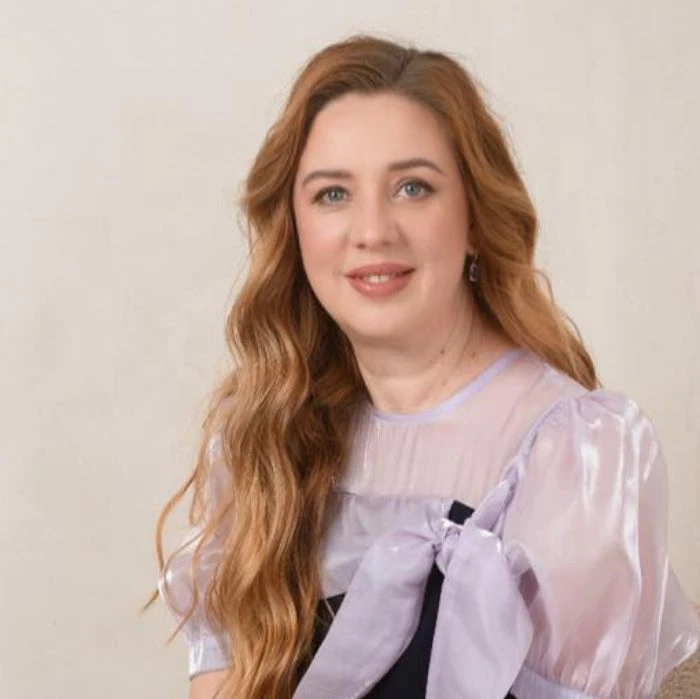
Opinion column by Tetiana Kukhotska, Secretary of the Supervisory Board, the Heart of Azovstal
Ukraine has already become a nation of veterans – this is not a projection for the future, but a reality today. According to the Ministry for Veterans Affairs, the country is already home to more than 1.7 million veterans. Once the war ends, that number could rise to 3-4 million – or as many as 5-6 million when their families are included, according to government estimates. At the same time, Ukraine’s working-age population stands at approximately 12-15 million.
This means that in the near future, one in every three people in the labour market will be a veteran.
Against this backdrop, the question of how Ukraine engages with its veterans is no longer a narrowly defined social issue – it's a matter of economic resilience, security, and the country’s future. The central challenge is not simply how to “support” veterans, but how to integrate them into active life.
From a Soviet legacy to a society of opportunity
Ukraine has historically inherited a Soviet-era approach in which veterans were seen as people to be provided for, but not truly integrated into society. After World War II, many veterans – particularly those with disabilities – were effectively pushed to the margins, while the very notion of inclusion was virtually absent.
Today, such an approach is not only outdated – it is no longer acceptable. A modern Ukrainian veteran brings experience of responsibility, leadership, and decision-making in critical situations. This is a resource that can help drive economic growth. Therefore, the key task is to create conditions in which veterans do not drift to the periphery of civilian life, but instead become its driving force.
At the same time, it is important to recognise that the grounds for leaving military service and obtaining veteran status remain limited: severe injuries resulting in disability, captivity, or certain family circumstances. In many cases, a veteran is someone who has gone through hell. Yet this does not mean they are “broken”. It means their experience must be acknowledged, processed, and transformed.
We have studied international approaches to working with veterans in Israel, across Europe, and in the United States. The American model has proven particularly effective, though it still requires adaptation to Ukraine’s context.
The myth of a “nation with PTSD”
At the outset of the full-scale invasion, there were widespread fears that Ukraine would be overwhelmed by a wave of PTSD that society would be unable to absorb. In reality, the picture has proven more nuanced and, in many ways, more hopeful.
Research suggests that the human psyche is far more resilient than previously assumed. Even in extreme conditions – under constant shelling, on the front lines, or in captivity – people are capable of adapting and continuing with their lives.
This does not mean that trauma is absent. It means there is another way of working with it – and that path is post-traumatic growth.
Post-traumatic growth is a process in which a person does not simply recover from trauma, but undergoes a deeper internal transformation. After experiencing pain, loss, war, or captivity, individuals can develop new inner strength, a renewed sense of purpose, and a different set of values. The pain does not disappear but it is reshaped into something that provides meaning and enables forward movement.
Within Rinat Akhmetov’s Heart of Azovstal initiative, which works with the defenders of Mariupol, one important insight has emerged: even after captivity – one of the most severe experiences imaginable – not all veterans develop PTSD. However, almost all face another challenge: how to move forward with their lives.
They return to a world that has changed. Sometimes to new family realities. Sometimes without a home. Sometimes with new physical limitations. And almost always with the same question: Who am I now?
This is where the real work begins.
How post-traumatic growth begins
The experience of the Heart of Azovstal shows that effective support cannot begin after a person returns – it must start much earlier. That is why engagement begins even while defenders are still in captivity, through support for their families.
We help families understand how to welcome their loved one home after trauma, how to avoid making things worse, and how to provide a steady support. This is the first stage.
Upon return, the immediate priority is to meet essential needs:
- restoring documents
- providing medical care (often complex, from treating infectious diseases to performing major surgery)
- ensuring rehabilitation and prosthetic support
- providing housing.
Only then comes the most difficult stage: finding a new role in life. This is not just about employment, but about rediscovering one’s strengths, interests, and sense of purpose – and only then identifying a suitable professional path.
From “aid” to partnership
The defining feature of this modern approach is a clear shift away from the mindset of “we know what’s best for you”. At the Heart of Azovstal, each veteran is paired not with a provider of “assistance”, but with a partner – a mentor operating on a peer-to-peer basis.
The organisation has already trained ten post-traumatic growth coaches from among the defenders of Mariupol. These are individuals who have experienced intense combat, injuries, amputations, and captivity and who have gone on to find new purpose in helping others. They have been trained through international programmes, including those drawing on American experience, and continue to build their expertise in Ukraine.
These coaches accompany veterans from the earliest days after their return through to the point where they find their place in civilian life.
Post-traumatic growth as a new national norm
Today, Ukraine has a limited window of opportunity to test, refine, and scale these approaches. Waiting until the war ends is not an option. Post-traumatic growth is already moving beyond individual initiatives:
- it is being introduced into university curricula
- state-level frameworks are beginning to take shape
- discussions are underway on scaling it nationwide.
Because this is not only about veterans. It's about what kind of country Ukraine will become after the war – a country defined by trauma, or a country defined by strength. And that choice is being made right now.