

Following the onset of its full-scale invasion, Russia has systematically targeted and destroyed Ukraine’s energy infrastructure. Since 2022, more than 600 strikes on energy facilities have been documented. Although the total number of strikes in 2025 has not yet surpassed previous peaks, their intensity has increased - particularly towards the end of summer – heightening the risk of power outages in autumn and winter. In response, Ukraine has embarked on decentralization of its energy infrastructure to enhance resilience and mitigate the risk of massive blackouts. DTEK Group, the country's largest private investor in the energy sector, has embraced new solutions in renewable energy and commissioned a decentralized battery energy storage system (BESS).
Energy security is a critical issue not only for Ukraine but for Europe as a whole, which remains heavily dependent on Russian fossil fuels. In 2024 alone, the European Union (EU) spent an estimated €21.9 billion on Russian energy imports, including gas and oil. Moscow used its natural resources not only to finance the war in Ukraine but also as a means of exerting influence on the continent to accomplish its geopolitical interests. Russia’s full scale invasion underscored Germany's exposure to geopolitical risks and accelerated its efforts to reduce reliance on Russian gas. Following the Fukushima disaster in 2011, Berlin revised its nuclear energy policy, culminating in the shutdown of its final three nuclear reactors on April 15, 2023.
Now Germany reassesses its perspective. Core strategies involve accelerating the growth of wind and solar power, diversifying energy imports through liquefied natural gas (LNG), developing hydrogen infrastructure, and implementing policies such as the “n-1 criterion” to ensure grid stability. Additionally, the European Commission plans to eliminate all purchases of Russian LNG by 2026, according to a draft proposal obtained by POLITICO (*). The transition to renewable energy, however, faces significant challenges: high initial investment costs, weather-dependent intermittency, the requirement for storage systems to maintain reliable supply, land-use and habitat impacts, dependence on mined materials for equipment production, and the need to modernize grid infrastructure to accommodate variable generation.
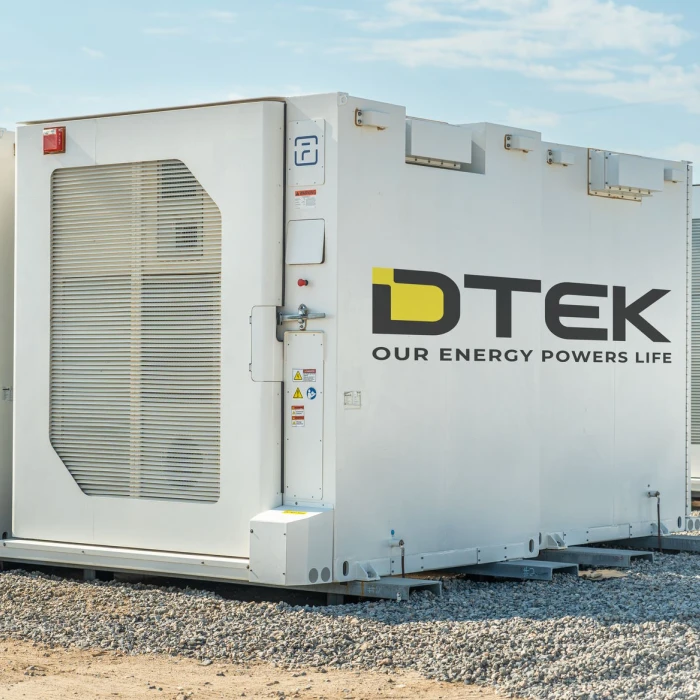
DTEK and Fluence Energy, Inc. (“Fluence”) (NASDAQ: FLNC), a global energy storage leader, launched in Ukraine the largest battery energy storage project in Eastern Europe. The deployment of 200 MW of connected power across six locations entered the final phase of delivery, which includes commissioning, testing and first discharge of the batteries. Under the contract with grid operator Ukrenergo, commercial operations are set to begin in October 2025 – in time for the start of Ukraine’s crucial winter heating season.
Even with rapid growth in wind and solar, these sources are intermittent — they depend on weather conditions and time of day. Nuclear power plants provide steady energy generation, but they are expensive to build, and they can’t cower peaks of demand. Hydro-power plants can be used for ramping up energy supply in peak hours, but that type of generation is terrain-reliant and can’t be a solution for all countries in transition to green energy-generation and self-sufficiency. That’s why fossil fuel plants (especially gas-fired power plants) are still very important in most regions - they provide dispatchable generation, meaning they can be ramped up or down quickly to balance fluctuations and maintain grid stability. Firming renewable – or even nuclear – generation with BESS is important for the countries on the road to energy independence.
BESS offers a solution to energy storage produced by renewables. It also protects against energy fluctuations caused by weather, blackouts, or geopolitical reasons. This technology is a new trend in the energy supply world. Nowadays, battery systems play a significant role in keeping businesses and homes running on a continuous power flow. Switching to a decentralized battery energy storage system is a growing trend in the energy sector. Over the past few years, the BESS market has been the fastest-growing segment of battery demand, surpassing even the electric vehicle (EV) sector.
Rinat Akhmetov, the founder and shareholder of SCM, the parent company for DTEK, said that despite the war, Ukraine’s energy sector stays strong. “We await the end of the war and a lasting, sustainable peace. But even under fire, we invest in Ukraine’s recovery and growth. Our energy sector, having withstood countless and horrendous Russian attacks, now gains new momentum: we are launching a cutting-edge energy storage system — unique not only for Ukraine, but for Western nations as well. Deep thanks to our American partners for making this possible”.
Julie S. Davis, the US Ambassador to Ukraine, who was present at the opening of the project, said that it brings cutting-edge American technology to Ukraine to strengthen the energy grid. “It is this partnership that excludes technologies or parts or components that come from those who have not supported Ukraine during all of these years. We all know that there are so many front lines in this war and one of them runs directly through Ukraine’s power plants, substations, and energy infrastructure.”
DTEK employed 200 MW total capacity across six locations in Ukraine (Kyiv and Dnipropetrovsk regions), and 400 MWh electricity storage. It will be enough to power 600,000 Ukrainian homes for two hours. So far, it is the largest operational battery storage portfolio in Eastern Europe at the time of commissioning.
According to the British Rho Motion’s BESS database as of February 2025 (*), by 2027 the top 20 countries’ deployed BESS grid capacity will have grown by at least 289% compared to 2024. That considered, there will be significant regional disparities with some markets growing faster than others. China is leading in current installations and pipeline capacity of BESS, followed by the United States, Australia, and Saudi Arabia. Chilean and Canadian emerging markets show significant pipeline growth, while countries like Japan and South Korea, despite being tech leaders, have relatively low planned BESS expansions.
China targets 180 GW BESS capacity by 2027 under a $35 billion plan, according to the Enerdata (3). The National Development and Reform Commission (NDRC) of China aims to promote the use of BESS on the power generation side, especially in new energy bases such as deserts or wastelands, and on power grid sides, especially in remote areas. It will also focus on industrial parks, computing power facilities, commercial complexes, integrated charging stations for solar PV storage, and other application scenarios. Reuters, citing the National Energy Administration, reported that current installed new energy storage capacity, which is made up mostly of lithium-ion battery storage, was 95 GW.
Canadian Energy Regulator (*) (CER) said that energy storage may multiply by 2030. “BESS is the fastest growing energy storage technology in Canada and is also the dominant storage technology in terms of capacity and number of sites. All but four projects proposed to be commissioned by 2030 are battery storage, with two CAES [conventional compressed air energy storage] and two PHS projects also proposed. BESS projects generally have smaller footprints (when compared to PSH and CAES) and they have the ability to scale up in size” CER added that within Canada, all energy storage projects currently under construction are BESS. “Proposed and under-construction projects have a power range between 1 MW and 411 MW, with an average storage capacity range of 0.5 hours to 6 hours.”
South Korea recently announced plans to host a competitive solicitation for 540 MW of grid-connected energy storage (*). The project will allocate 500 MW of large-scale BESS on the Korean mainland and 40 MW on Jeju Island, a well-known destination for both domestic and international tourists. These contracted BESS are designed to ease power grid shortages and regulate power plant output.
BESS has almost no impact on the environment. This factor is important in a country already suffering from the pollution caused by the Russian war. The operation of the electrical energy storage facility does not pose any additional environmental hazard compared to the operation of the existing energy infrastructure adjacent to the planned facility. It is worth noting that the basis of the electrical energy storage unit technology is sealed, solid-state lithium batteries, which, unlike lead-acid batteries, cannot be a source of heavy metal and acid vapour emissions into the atmosphere or acid leakage into the soil.
Ukrainian DTEK is also participating in Poland's first major project to build electricity storage systems. The goal is to create a pan-European energy system designed to unite Ukraine and the EU.