

The Rinat Akhmetov Foundation and the Republic of Cyprus have agreed to develop joint programmes of post-traumatic growth for Ukrainian veterans. The cooperation will be built within the Heart of Azovstal project and will connect Ukrainian and Cypriot universities, research centres and expert institutions. It marks a further step in bringing Ukraine's experience of veteran care into international academic and professional networks.
What was agreed at the meeting with the Ambassador of Cyprus?
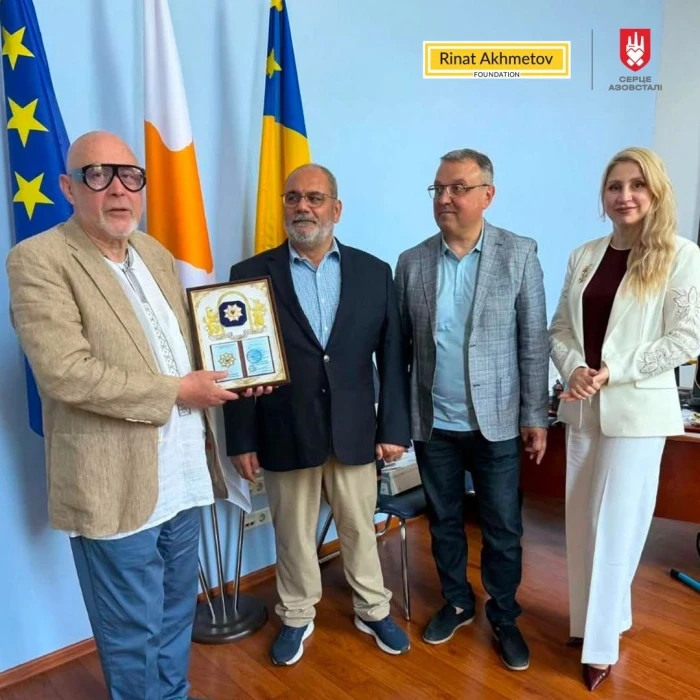
Kseniia Sukhova, Chief Executive Officer of the Rinat Akhmetov Foundation, with the support of Stepan Makhsma, Head of the Federation of Greek Societies of Ukraine, met the Ambassador Extraordinary and Plenipotentiary of the Republic of Cyprus to Ukraine, Michalis Firillas. The sides discussed cooperation on veterans' support, mental resilience and community development, with a central focus on developing post-traumatic growth programmes within the Heart of Azovstal project. This will involve an international partnership between Ukrainian and Cypriot universities, research centres and expert institutions working to overcome the consequences of trauma.
Why does Cyprus matter as a partner?
Cyprus combines modern medicine and established rehabilitation services with a long-standing relationship with Ukraine, and it holds the Presidency of the Council of the European Union in the first half of 2026. The talks covered cooperation with leading Cypriot universities and the launch of joint educational and research programmes. The sides also discussed closer institutional ties between the Foundation, Cypriot state bodies and European organisations, and the integration of Ukraine's experience of veterans' support into international platforms and professional communities.
What is the Heart of Azovstal project?
Heart of Azovstal supports the defenders of Mariupol and their families, with particular expertise in helping those who have returned from russian captivity. Built around the principles "Nothing for defenders without defenders" and "From rehabilitation to self-realisation", it spans physical recovery, psychological support and reintegration into civilian life. The project has helped more than 260 families receive housing and has built a community of around 2,500 members across six chapters, offering career mentorship, retraining, education and employment support.
How will the cooperation benefit the Ukrainian veterans programmes?
"For Ukraine, supporting veterans and people who have lived through the traumatic experience of war is already one of the key challenges today," said Kseniia Sukhova. "Cooperation with Cypriot institutions will let us strengthen post-traumatic growth programmes, bring together scientific, practical and international expertise, and create new opportunities for the recovery and self-realisation of veterans."
The aim is to help veterans and defenders released from captivity not only overcome what they have lived through, but regain control of their lives and realise their potential.