

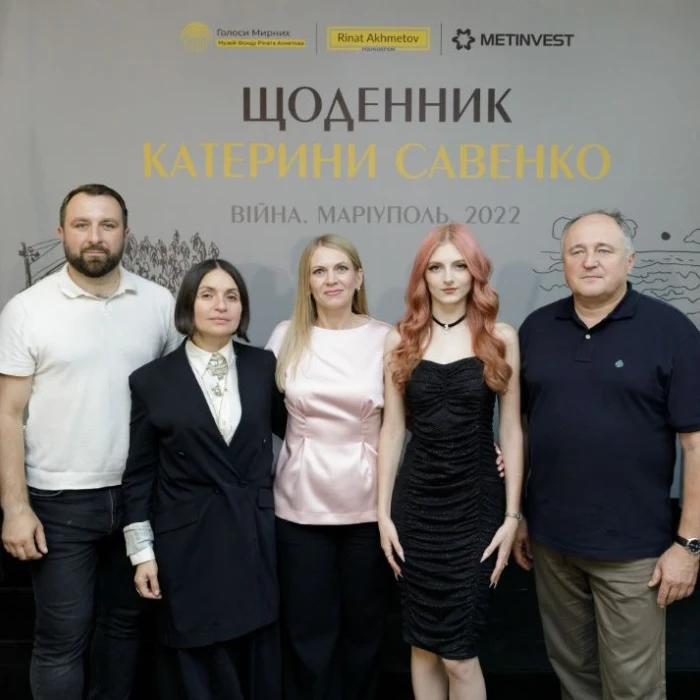
On 21 July, the book "The Diary of Kateryna Savenko" was presented in Kyiv. It is the personal record of a Mariupol resident who documented the first weeks of the russian siege of the city. The publication was prepared with the support of the Rinat Akhmetov Foundation and our steel company Metinvest. The book is now available in Ukrainian bookshops.
Who was Kateryna Savenko?
Kateryna Savenko, 42, worked at the Ilyich Iron and Steel Works in Mariupol. She made her first diary entry on 24 February 2022 and kept writing through the siege. On 29 March, her husband Vitalii was killed during shelling and Kateryna was seriously wounded. She died on 4 April. Before her death, she asked her sister to find the records and tell the world what was happening in Mariupol, and asked her daughter to keep the diary. Her family found the two notebooks and took them out of the occupied city.
What does the diary contain?
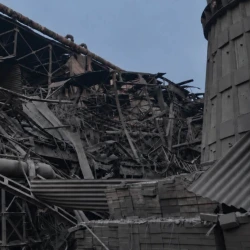
The two notebooks hold 34 entries about the life of Kateryna's family and neighbours, the shelling, the search for water and food, nights in the basement, the destruction of the city, and memories of peaceful Mariupol. The records became part of the archive of the Museum of Civilian Voices and the basis for the book.
How was the book prepared?
Natalya Yemchenko, Chairwoman of the Supervisory Board of the Rinat Akhmetov Foundation and Chief Corporate Affairs Officer at SCM, spoke about the care taken in preparing the book honestly, as Kateryna wanted it to be presented, and said the team returned repeatedly to ethical questions during the work.
"For us, it was extremely important to do everything correctly... This was our first such experience and we had no right to make any mistakes. Our task was not to produce shock content. Our task was to do everything correctly."
Ms Yemchenko explained that the team consulted Kateryna's family and kept a clear boundary between the author's entries and the added materials.
Why do personal testimonies matter?
Human rights defender Oleksandra Matviichuk said that personal records can hold details of events, help to verify information, and support other materials. She noted that survivors may understand justice in different ways, from seeing those responsible held to account to learning the truth about their loved ones. Andrii Servetnyk, a doctor who led Mariupol city hospital No. 4 in 2022, described the diary first as memory and then as justice — for those who died, those who survived, and the wider world.
Where can you read the book and see the exhibition?
"The Diary of Kateryna Savenko" is available in Ukrainian bookshops. The Museum of Civilian Voices is also preparing electronic and audio versions and is in talks on translations and publication abroad. An exhibition dedicated to the diary runs in Kyiv from 21 July to the end of August at the Museum of the History of the City of Kyiv (7 B. Khmelnytskoho Street), open Wednesday to Sunday, 12:00–19:00, with free entry. The Museum of Civilian Voices is the world's largest archive of civilian stories about russia's war against Ukraine, with more than 145,000 records to date.