

A new article published by the Atlantic Council, authored by Alex Serban, director of the Atlantic Council's Romania Office, and Geoffrey Pyatt, former United States assistant secretary for energy resources and former US ambassador to both Greece and Ukraine, examines the growing strategic partnership between Romania and Ukraine following President Zelenskyy's visit to Bucharest on 12 March 2026.
The article highlights how the visit — which included the signing of a Strategic Partnership Declaration covering defence, energy, economic cooperation, and minority rights — marks a significant step in Romania's evolution from a supportive neighbour into a strategic enabler on NATO's eastern flank.
SCM's companies feature prominently in the analysis as examples of how Ukraine's private sector is adopting an increasingly European focus.
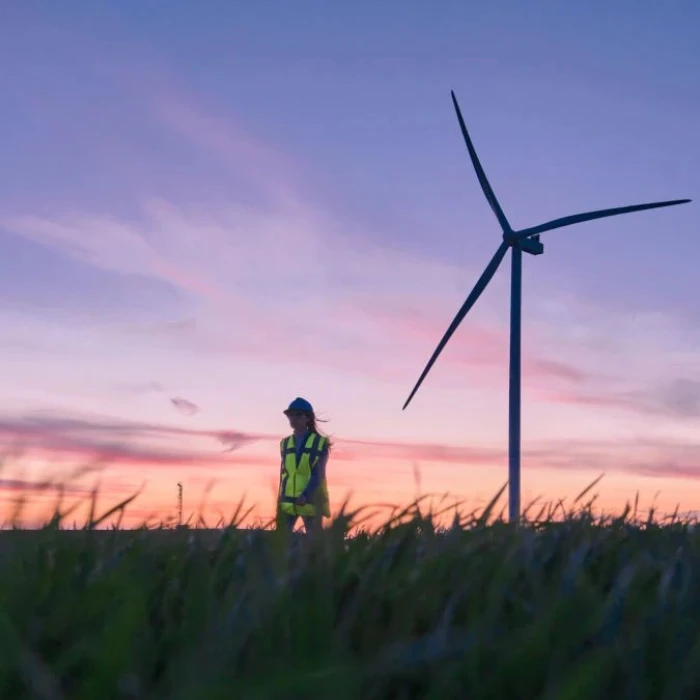
DTEK, Ukraine's largest private energy company and part of SCM, is expanding its renewables portfolio in Romania through a combination of new build and acquisitions in wind and solar energy. DTEK is targeting a one-gigawatt portfolio in Romania by 2030, with projects including the 60 MW Ruginoasa wind farm, the 53 MW Glodeni I solar park, and the 126 MW Vacaresti solar farm, which was commissioned in December 2025.
Metinvest, also part of SCM, has acquired ArcelorMittal's Tubular Products plant in Iași, close to the Romanian border with Moldova. Together, these investments form a growing cluster of Ukrainian energy and metals capacity in Romania, demonstrating how SCM companies are integrating into the European industrial and energy landscape.
DTEK is also playing a strong role in supporting US-Europe energy ties through its involvement with the Vertical Corridor, a planned gas route running from Greece to Ukraine via Romania. As the article details, this initiative is opening opportunities for increased US liquefied natural gas exports to southeastern Europe and helping to position the region ahead of the European Union's 2027 phase-out of all russian gas. The Vertical Corridor reinforces Ukraine's energy resilience while advancing Romania's ambition to serve as a regional energy hub linking Ukraine and Moldova with EU member states.
The Atlantic Council article notes that the combination of energy, metals, and now defence industry investments positions Romania as one of the main operational gateways for reconstruction projects and postwar economic cooperation with Ukraine.
SCM remains committed to supporting Ukraine's European integration and to investing in partnerships that strengthen regional energy security, industrial capacity, and economic growth.
Read the full Atlantic Council article by Alex Serban and Geoffrey Pyatt here: https://www.atlanticcouncil.org/dispatches/romanias-drone-and-energy-plans-with-ukraine-make-europe-stronger-and-more-secure/