

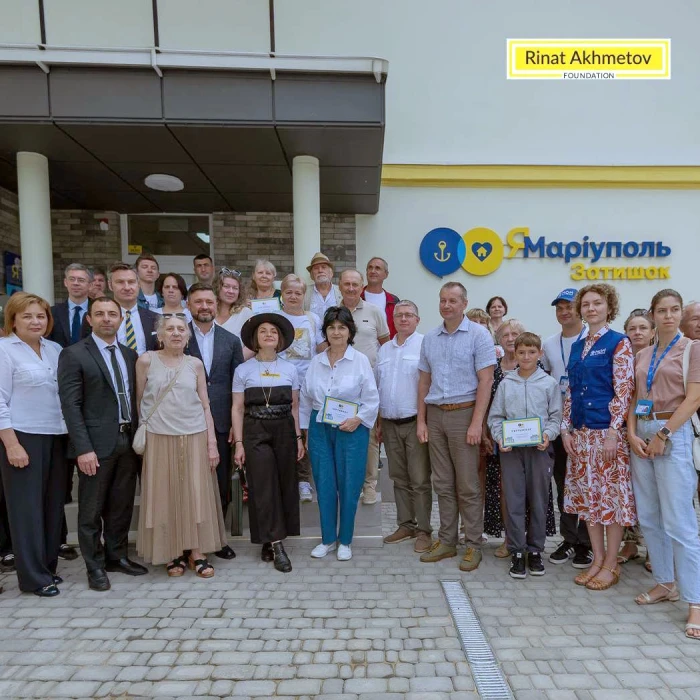
A newly restored social housing facility has opened in Chernivtsi, providing modern accommodation for 52 families displaced from Mariupol by the war. The project represents a major collaborative effort between the French government, the International Organization for Migration (IOM) and the Rinat Akhmetov Foundation. By restoring a historic building, the partners have created both private living quarters and fully equipped communal spaces designed to foster community integration and long-term stability for vulnerable families, particularly those of military personnel.
How did international cooperation make the Chernivtsi social housing project possible?
The realisation of this social housing project serves as an example of how international partnerships can address urgent humanitarian needs in Ukraine. The building itself, which is over a century old and formerly served as barracks, was in an advanced state of decay and required extensive rehabilitation. The funding required for the structural overhaul was provided directly by the government of France. Following this financial commitment, the International Organization for Migration stepped in to manage and execute the complex technical renovation works. This joint international intervention ensured that an unusable historical structure was successfully converted into safe, modern residential real estate.
What role did the Rinat Akhmetov Foundation play in developing the facility?
While international partners focused on the structural restoration of the building, the Rinat Akhmetov Foundation focused on turning the facility into a functional, welcoming home. The Foundation took complete responsibility for designing, furnishing, and equipping all shared areas within the property. This involved installing modern, fully functional kitchens, creating safe and engaging spaces for children, establishing an indoor sports gym, and designing comfortable areas for adult leisure and social interaction. The focus on high-quality common spaces is intended to help residents form a tight-knit neighbourhood network, which helps mitigate the psychological impact of displacement caused by the war.
Why is community integration the ultimate goal of the initiative?
Providing a roof over someone's head is only the first step in addressing the displacement crisis caused by the invasion. True recovery requires integrating displaced individuals into their new host cities. Experience from earlier stages of this housing initiative in cities like Dnipro demonstrates that shared spaces benefit the wider neighbourhood. When sports grounds and play areas are opened up, they become meeting points for both the newly arrived Mariupol residents and local families. This interaction breaks down social barriers, fosters mutual understanding, and allows displaced families to become active, recognised participants in the local civic fabric.
What are the next steps for the “I'm Mariupol” housing programme?
The opening of the Chernivtsi facility marks the fifth completed location under the broader housing framework. To date, the joint efforts of the Mariupol City Military Administration, the Rinat Akhmetov Foundation, and various international donors have successfully housed nearly 550 families across Kyiv, Dnipro, and Chernivtsi. The project is designed to scale up systematically. Preparations are already underway for the next phases of development, which will see similar social housing complexes open in Kropyvnytskyi and Zaporizhzhia, ensuring continued, structured support for Ukrainians who lost their homes to the war.