

Despite the war, massive attacks and a challenging heating season, residents of Kyiv Region kept the lights on - thanks to meticulous winter preparations, digitalisation, and coordinated efforts of DTEK Kyiv Regional Power Grids. The company invested UAH 1.5 billion in network repairs and upgrades.
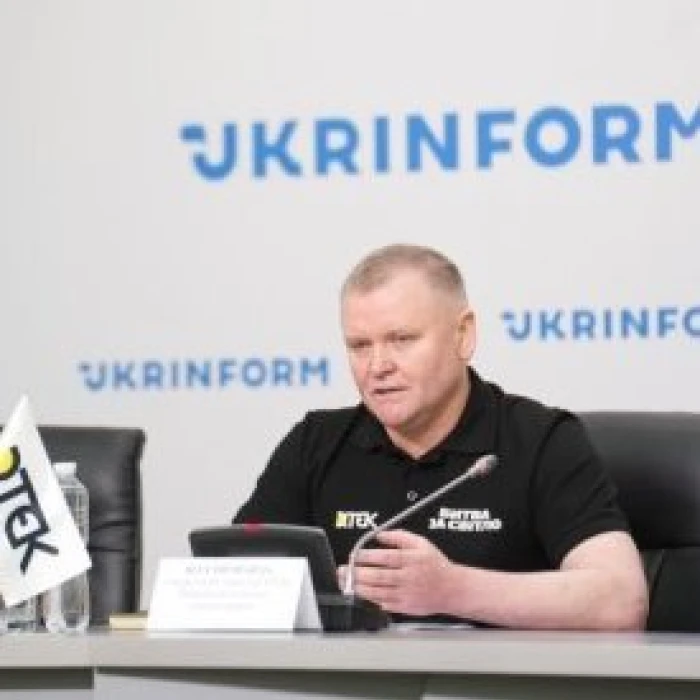
During a press briefing, Vitalii Shaida, CEO of DTEK Kyiv Regional Power Grids, reported that the company had repaired and upgraded over 9,500 km of overhead power lines, modernised almost 2,000 energy facilities and completed 852 cable line repairs. Crews also cleared more than 4,000 km of vegetation from power line corridors. These large-scale efforts helped the company brace for the autumn-winter season and successfully deliver reliable power to residents of Kyiv Region throughout martial law conditions.
“In 2024, we connected almost 13,000 new facilities and households - 80% of our 2021 figure. This proves that Kyiv Region keeps on living, building and developing, and this requires modern power infrastructure. We are channelling all available resources to strengthen the grids to meet the region’s need for a stable and resilient energy system. In 2024, we invested UAH 1.5 billion into network upgrades, and we plan to invest another UAH 1 billion in 2025,”
said Vitalii Shaida.
In 2025, the company aims to repair over 1,600 energy facilities and more than 9,000 km of overhead power lines, as well as clear vegetation from another 4,000 km of corridors beneath them.
DTEK Kyiv Regional Power Grids continues to position itself as a reliable partner for businesses supporting green energy generation - a vital factor in Ukraine’s energy independence and power supply stability. In 2024, five industrial green energy facilities connected to the company’s grid: two solar power plants, one bioenergy facility, and two thermal power plants.
Another 1,500 prosumers - households with solar generation systems - also joined the grid. These residential generators play a key role in strengthening the system’s resilience, especially under frequent attacks on large-scale generation and transmission facilities.
Digital transformation has become another pillar of stability. In 2024, the company launched a pilot project at the Irpin energy hub, using a digital twin of the power grid. This tool enables faster emergency response, improved load management, and greater reliability of electricity supply.