

Ukraine's electricity system follows the same model used across the European Union. This means that different parts of the system — generating power, transmitting it across the country, distributing it locally, and selling it to customers — are managed by different companies. Some of these functions are run by state-owned companies, because they would not work well with competing operators. Other parts of the system are open to private investment and competition, because that drives efficiency, innovation, and better outcomes for consumers. This is not unique to Ukraine; it is how modern European electricity markets are designed to work.
The war has put huge pressure on this system. russia has systematically targeted energy infrastructure with missile and drone strikes, destroying or occupying roughly two-thirds of Ukraine's pre-war power generating capacity. DTEK, the country's largest private energy company, has been hit particularly hard: around 70 per cent of its thermal generation capacity has been damaged, destroyed, or seized. The human cost has been severe too, with engineers routinely carrying out repairs under fire and suffering fatalities and casualties in the process. Recent months have seen some of the most intense strikes of the war on energy infrastructure, forcing emergency blackouts across most regions in freezing winter temperatures.
In response, DTEK is leading efforts to rebuild Ukraine's energy system around smaller, distributed assets that are harder to target and quicker to restore. DTEK's ten-year, multi-billion-euro plan to modernise power generation and supply is designed to strengthen the operation of the European energy model in Ukraine for the long term and keep the lights on as best as possible even under russian attack.
Generation: where does electricity come from?
Electricity is typically generated from spinning turbines. The power to spin these turbines can come from various sources: nuclear, coal, gas, water or wind. Electricity generation is open to market competition. Multiple companies, both state-owned and private, produce electricity from different fuel sources and technologies.
Nuclear power
Nuclear energy is the backbone of Ukraine's electricity supply. Even during the war, it typically provides around 60 per cent of the country's electricity. All nuclear generation is managed by Energoatom, a state-owned company that operates 15 pressurised water reactors of the VVER design across four sites.
Three of these plants are fully operational: the Rivne Nuclear Power Plant (four reactors), the Khmelnytskyi Nuclear Power Plant (two reactors in operation), and the South Ukraine Nuclear Power Plant (three reactors). Together, these nine reactors form the core of Ukraine's electricity supply.
The fourth site, the Zaporizhzhia Nuclear Power Plant, is Europe's largest nuclear facility with six reactors. It has been under russian military occupation since the early weeks of the full-scale invasion and all six reactors have been shut down. The plant is not generating any electricity, but it still requires a constant supply of external power to cool the shut-down reactors and spent fuel. This has been an ongoing source of international concern: the plant has lost off-site power more than a dozen times during the war, sometimes for weeks, forcing it to rely on emergency diesel generators. The International Atomic Energy Agency maintains a permanent monitoring presence at the site.
The loss of Zaporizhzhia's six reactors — which alone could power a small European country — has been devastating for Ukraine's energy balance and represents one of the most significant consequences of the war for the electricity system.
Thermal power
Thermal power plants, which burn natural gas or coal to generate electricity, provide a flexible source of generation that can be ramped up and down to meet demand. In Ukraine, thermal generation includes both state-owned and privately operated plants. DTEK Energy, part of the DTEK Group, is the largest private operator of thermal power stations in Ukraine, running plants in several regions.
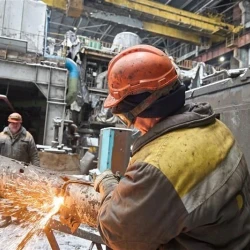
Thermal generation has been severely affected by the war. russia has systematically targeted thermal power plants with missile and drone strikes. By some estimates, around 70 per cent of Ukraine's thermal generation capacity has been damaged, destroyed, or seized since the full-scale invasion began. Despite this, DTEK and other operators continue to repair and restore damaged equipment, often working under extremely dangerous conditions and with their engineers regularly coming under fire.
Hydropower
Hydroelectric power is generated by the state-owned company Ukrhydroenergo, which operates ten power plants along the Dnipro and Dnister rivers. Hydropower is particularly valuable for its ability to respond quickly to changes in demand — dams are like massive batteries which can be switched on and off to help balance the grid during peak hours or emergencies.
Hydropower has also suffered significant war damage. The Kakhovka Hydroelectric Power Plant, one of Ukrhydroenergo's major facilities, was destroyed in June 2023 when the Kakhovka dam was blown up by russia. Other hydro plants along the Dnipro have been damaged by missile and drone strikes and are undergoing restoration with support from the European Bank for Reconstruction and Development and the European Investment Bank.
Renewable energy and battery storage
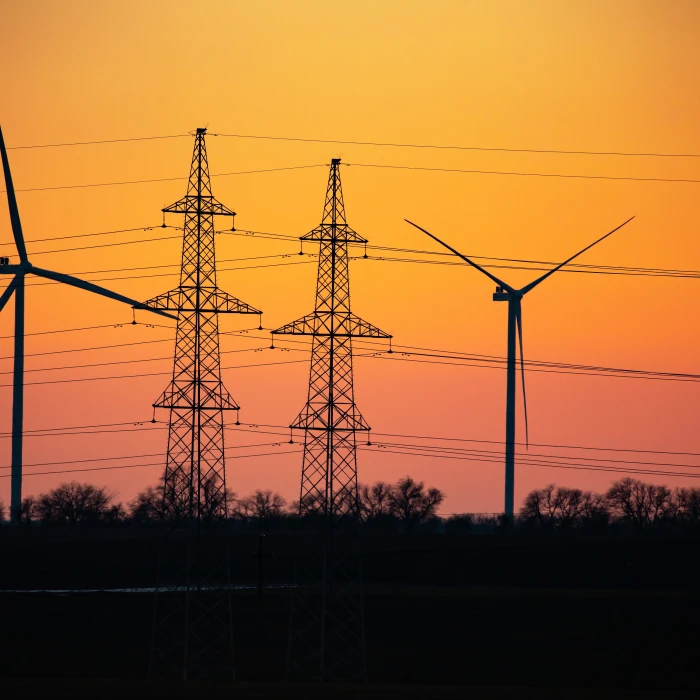
Ukraine has a growing fleet of wind and solar power plants, largely developed by private investors. DTEK Renewables is the largest private operator of wind and solar generation in the country, with wind farms and solar parks across several regions. The company's Tyligulska Wind Power Plant in the Mykolaiv region, near the Black Sea, was the world's first wind farm built during an active war. Its first phase of 114 megawatts was completed in 2023 using Danish Vestas turbines, and a €450 million second phase is now under construction that will expand the facility to nearly 500 megawatts — enough to power 900,000 homes and making it the largest wind farm in Eastern Europe built in over a decade. DTEK is also planning a further 650 megawatt wind farm in Poltava, central Ukraine, as part of a target to reach 2 gigawatts of renewable capacity by 2030.
On the solar side, Ukraine's commercial and industrial rooftop market remains largely untapped, with an estimated annual potential of 300 megawatts. To unlock this, DTEK launched RISE (Resilient Independent Solar Energy) in June 2025, a partnership with British clean energy technology company Octopus Energy Group. The programme aims to raise €100 million to install rooftop solar and battery storage systems on 100 business and public sector sites over three years. The systems are managed through Octopus's Kraken platform, allowing businesses to optimise their energy use in real time, reduce consumption during peak hours, and sell surplus electricity back to the grid. RISE is delivered by DTEK's energy services business, D.Solutions, under the YASNO retail brand, and represents a significant step toward giving Ukrainian businesses greater control over their own energy supply.
Renewable energy sources such as wind and solar are intermittent — they generate electricity when the wind blows or the sun shines. This is where energy storage becomes essential. In September 2025, DTEK, in partnership with the American technology company Fluence, brought online Ukraine's largest battery energy storage system (BESS): a 200 megawatt, 400 megawatt-hour portfolio spread across six sites in the Kyiv and Dnipropetrovsk regions. With a total investment of 125 million euros, this project was built in just six months — significantly faster than the industry average — driven by the urgent need to have it operational before the winter season.
These battery systems can store enough electricity to power 600,000 homes for two hours. Crucially, they also provide what are known as ancillary services (sometimes called system services) to the transmission system operator, Ukrenergo (described below). Ancillary services are the technical functions that keep the electricity grid stable — things like frequency regulation, which ensures the grid operates at exactly 50 hertz, and fast-response reserves that can be activated within milliseconds when a power station trips offline or a transmission line is damaged by an attack. Conventional power plants take minutes or even hours to respond; battery systems can react almost instantly. In a system that faces sudden and unpredictable supply disruptions caused by russian strikes, this capability is not a luxury but a necessity.
Transmission: moving electricity across the country
Once electricity is generated, it needs to be transported across long distances at very high voltages to reach the regions where it is consumed. This is the job of the transmission system. In Ukraine, as in virtually every European country, the high-voltage transmission network is operated by a single state-owned company: Ukrenergo.
The reason for this is straightforward. A transmission network is what economists call a natural monopoly — it would make no sense to build two or three competing sets of high-voltage power lines across the country. Having a single, independent operator ensures that all generators and consumers have fair and equal access to the grid, and that the system is managed in a coordinated way to maintain security of supply.
Ukrenergo operates the transmission grid (lines of 220 kilovolts and above) and is responsible for balancing supply and demand across the whole system in real time. It is also the entity that purchases ancillary services, such as those provided by DTEK's battery storage systems, to keep the grid stable.
Interconnection with Europe
A landmark moment in Ukraine's energy history came on 16 March 2022 when Ukraine's electricity system was successfully synchronised with the Continental European grid operated by ENTSO-E (the European Network of Transmission System Operators for Electricity). This switch to the European grid had been long planned for 24th February 2022 (there have been suggestions that russia chose to invade on this precise date in order to strike when Ukraine was at its most vulnerable). In reality, it became a moment for Ukraine to prove its ingenuity and partnership with European allies. Just three weeks after the full-scale invasion began, Ukraine connected to the European grid.
Synchronisation means that Ukraine's grid now operates in step with the European system, enabling electricity to flow across borders with Poland, Slovakia, Hungary, and Romania. This interconnection serves two vital purposes.
First, when Ukraine's own generation is insufficient — for example, after a major russian attack damages power plants and substations — it can import electricity from its European neighbours. Import capacity has been progressively increased, reaching up to 2.3 gigawatts for the winter of 2025-2026. During October 2025, after a wave of devastating strikes on energy infrastructure, Ukraine's electricity imports surged to their highest monthly level of the year.
Second, if Ukraine has a surplus of generation in milder months when demand is lower and nuclear and renewable output is strong, it can export electricity to European markets. This provides revenue for Ukrainian generators and contributes to the broader European energy balance. In August 2025, Ukraine achieved a record monthly export of 450,000 megawatt-hours. It is important to emphasise that exports only occur when domestic supply comfortably exceeds domestic demand; Ukraine's own consumers always come first during war-time.
Distribution: delivering electricity to homes and businesses
From the high-voltage transmission network, electricity is stepped down to lower voltages and delivered to end consumers through local distribution networks. Unlike transmission, distribution is a competitive activity in Ukraine and EU countries, with various regional distribution system operators.
DTEK Grids is the largest private distribution system operator in Ukraine, managing electricity distribution networks in Kyiv City, Kyiv region and the other regions of Dnipropetrovsk, Donetsk, and Odesa — serving approximately 5.6 million customers. In the regions where it operates, DTEK Grids is responsible for maintaining the local power lines, substations, and transformers that bring electricity to every home, school, hospital and factory.
This is physically dangerous work in wartime. DTEK Grids engineers routinely carry out repairs under fire and have suffered casualties from russian drone and missile strikes while restoring power to communities. In a single week in November 2025, DTEK Grids restored electricity to over a million homes in Kyiv alone after a single wave of attacks.
Other distribution companies operate in Ukraine's other regions, each responsible for their local network. As in other European countries, distribution companies are regulated by the national energy regulator, NEURC, which sets tariffs and investment requirements.
DTEK Grids is also investing in modernisation of its networks, including the large-scale rollout of smart meters and the creation of digital twins of its grid infrastructure — virtual models that help engineers identify weaknesses and plan upgrades more effectively.
Retail supply: selling electricity to consumers
The final link in the chain is the retail electricity supplier — the company that actually sells electricity to the end consumer and sends them the bill. In Ukraine's unbundled market model, this function is separated from both generation and distribution. Customers can, in principle, choose their electricity supplier.
DTEK's retail electricity business operates under the YASNO brand. YASNO supplies electricity to households and businesses in the Kyiv, Dnipropetrovsk, and Donetsk regions, serving around 3.5 million families. It has been recognised as one of Ukraine's leading electricity suppliers in independent assessments. Beyond simply selling electricity, YASNO also offers energy efficiency services and operates a growing network of electric vehicle charging stations.
In other regions of Ukraine, different retail suppliers serve customers, though the market is still developing and the extent of consumer choice varies.
A European model, tested by war
Ukraine's electricity system is built on the same principles as those in the European Union: separation of generation, transmission, distribution, and supply. Some assets like nuclear power plants and massive inter-regional transmission lines are owned by the state as it’s unlikely different private sector companies would build duplicate assets to compete in these areas. Elsewhere in the system like power generation and distribution to customers, private companies operate as they can bring outside investment and innovation to the sector. But both state-owned and privately-owned energy system companies are highly regulated by the national energy regulator (NEURC).
The war has tested this model to its limits and beyond. russia's systematic targeting of energy infrastructure — power plants, substations, transmission lines, gas production facilities — has caused damage estimated at over $20 billion. Yet the system continues to function. Power plants keep generating. Engineers keep repairing lines. New technologies, such as battery storage, are being deployed at pace. Cross-border interconnections with Europe provide a vital safety net. And private investment continues, even under fire.
The resilience of Ukraine's electricity system is not accidental. It is the product of a modern, European market structure that allows both state institutions and private companies to play their respective roles — the state ensuring strategic infrastructure is maintained, and the competitive private market driving efficiency, innovation, and investment even in the most challenging circumstances.