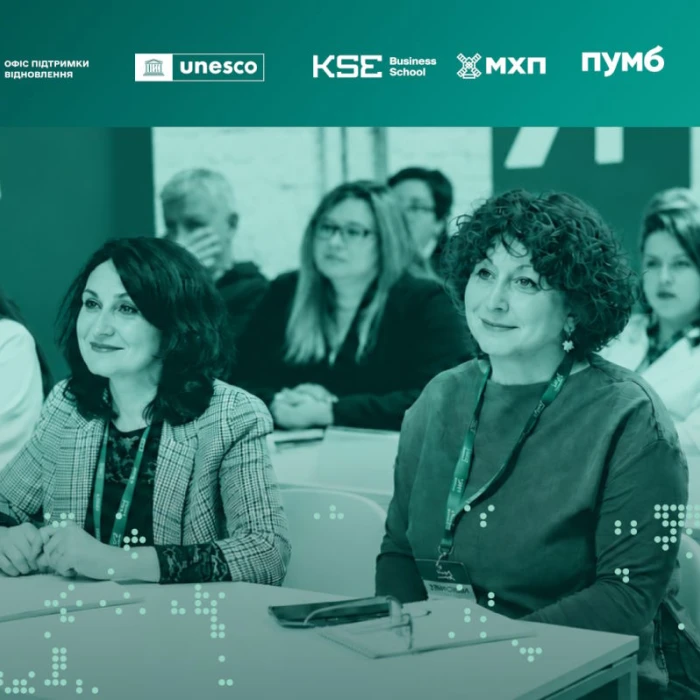
The "Leadership and Partnerships in Culture" programme has opened its second intake for teams from Ukrainian cultural institutions. SCM's bank FUIB is one of the programme's partners, together with the Ministry of Culture of Ukraine, KSE Business School, KSE Foundation, UNESCO, MHP, Raiffeisen Bank Ukraine and OTP Bank. The free three-month programme starts in December 2026 and will select up to 20 teams from across Ukraine. Participants will learn how to attract resources and build partnerships with business and donors.
What is the "Leadership and Partnerships in Culture" programme?
It is a free educational programme that helps Ukrainian cultural institutions attract resources, work with business and donors, and carry out their own projects. The Ministry of Culture of Ukraine started the programme, and the Recovery Support Office at the Ministry of Culture runs it. The second intake opened on 9 November, Ukraine's Day of Culture Workers and Folk Art Masters.
"Cultural institutions have valuable ideas and experience of working with heritage, and business can contribute resources and management expertise," said Tetiana Berezhna, Deputy Prime Minister for Humanitarian Policy – Minister of Culture of Ukraine.
Who is the programme for?
The programme is for teams from state, municipal and private cultural institutions. These include museums, heritage reserves, cultural centres, memorial and arts complexes, galleries and other organisations that work with cultural heritage. Each team has two people from the same institution, and at least one of them is a director or manager who can make decisions on partnerships, resources and projects.
How will the training work?
The programme lasts three months and has 11 online and offline modules. Teams will learn to plan the development of their institution, attract funding, negotiate, work with audiences and manage a team. They will also study the legal and accounting side of partnerships, reputational risks and international partnership opportunities.
"Business education exists to change the country. Cultural institutions preserve our identity when someone is trying to destroy it. And for them not only to survive but also to develop, they need the same skills that the best Ukrainian companies use to overcome crises. What works in business should also work in museums, theatres and libraries," said Yuliia Svyrydenko, President of KSE Business School (Kyiv School of Economics).
By the end of the programme, each team will prepare a partnership proposal and presentation for business and donors, a budget and financing plan, a marketing plan, performance indicators and a plan to launch a pilot project. Teams will present their projects to a panel of academics, partners and experts.
What has changed since the first intake?
The first intake received 88 applications from across Ukraine, and 30 representatives of 15 cultural institutions took part. Based on their feedback, the second intake includes more practical work, more consultations and a new module on marketing for cultural institutions. In this module, participants will study their audiences, define the position of their institution, choose communication channels and look at opportunities in cultural tourism.
How else does FUIB support Ukrainian society during the war?
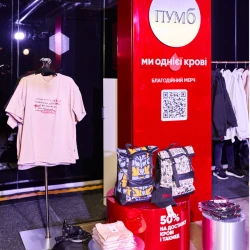
The programme is one of several social projects that FUIB supports. The bank recently started a partnership with the Sternenko Community charitable foundation. As its first result, the partners handed over five Hornet Vision Ctrl (TX) drone control units to the 105th Border Guard Detachment named after Prince Volodymyr the Great. With Mastercard, DonorUA and Blood Agents, FUIB also runs Warm-Blooded, a mobile blood donation hub. By early October 2026, 4,541 donors in 44 communities had given 2,043 litres of blood there. For the 35th anniversary of Ukraine's Independence, FUIB released Generation 91, a charity collection from its We Are of One Blood project. Half the price of every item goes to tactical medicine and to equipment for storing and transfusing blood.