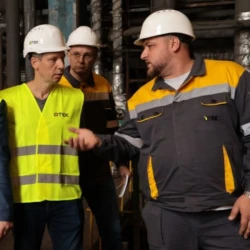


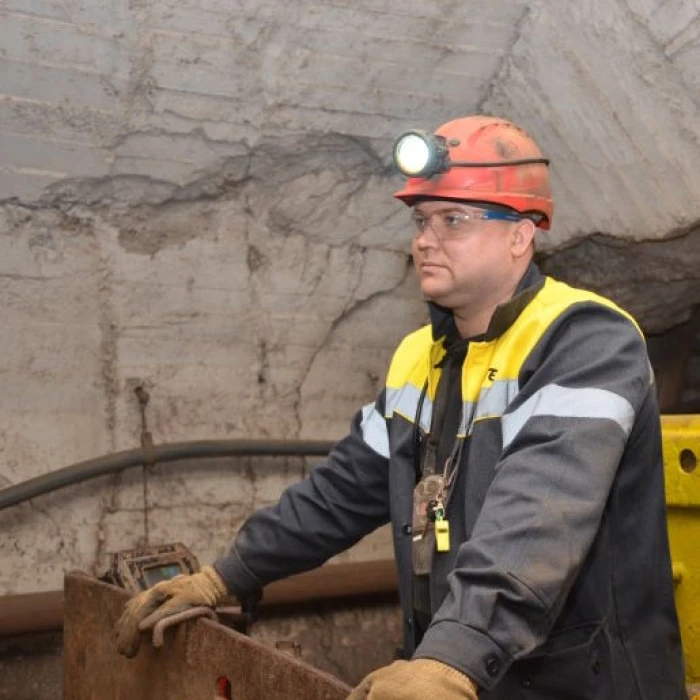
Since February 2022, DTEK Energy, part of our energy company DTEK, has employed almost 5,800 internally displaced people at its coal mining, repair, energy and machine-building enterprises, including around 550 in 2026. Many had no previous mining or energy skills and learned their profession on site at DTEK Academy. The company also provides housing support, relocation payments and a full social package.
How many displaced people has DTEK Energy employed?
DTEK Energy has employed almost 5,800 internally displaced people since February 2022, around 550 of them during 2026. More than 500 of them are women who completed two months of training and now work underground as part of a programme to bring women into mining professions.
How do people without experience learn a new profession?
New employees learn their profession at work, at branches of DTEK Academy in the regions where the company operates. Training combines theory, simulators and practical work. For some professions, VR and digital simulators allow workers to practise complex operations in a safe environment. Employees can officially confirm their new profession at one of DTEK's eight qualification centres, which cover 37 professions and 99 professional qualifications.
Kateryna Ziganshyna, Head of the DTEK Energy Employment Centre, said most people joining the company have never worked at a mine or power plant.
"That is why we start with training: a person gains a profession on site, with a mentor, and starts work already prepared. At the same time, we solve housing issues – from temporary accommodation to rent compensation – so that the employee can focus on work rather than on looking for a roof over their head," Ms Ziganshyna said.
What support do displaced workers receive?
DTEK Energy helps with housing, relocation and settling into new communities. The company offers temporary accommodation in hostels and at its own recreation facilities, and pays part of the rent every month once a family rents permanent housing. Employees also receive official employment, paid leave, preferential length of service for pension purposes, free household fuel or compensation for utility bills, modern workwear and deferment from mobilisation as critical infrastructure workers.
The DTEK Energy Employment Centre, which works in most regions of Ukraine with the State Employment Service and hubs for displaced people, has recruited 1,500 workers this year alone.
Why does this matter?
The support gives people who lost their homes because of the war a stable job and a new start.
"We give people not just a job, but a foundation: a profession, a stable income, housing and a community where they can rebuild a normal life," said Oleksandr Fomenko, CEO of DTEK Energy.
This approach reflects the strategy of our shareholder Rinat Akhmetov to keep the lights on in Ukraine and to support Ukrainians displaced by the war.